Danish Film Recasts Cult Trauma Through Actor Performances
A new hybrid documentary blends reenactments with testimonials to examine the 1990s Danish sect Faderhuset, premiering at the Tallinn Black Nights Film Festival.
By Fatou Kim ·
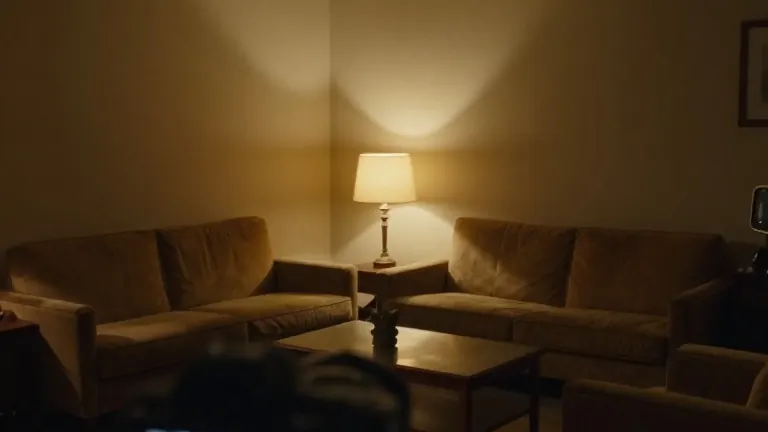
Audiences in Estonia will see a new approach to documentary filmmaking this week. The film Father's House opens on Monday as part of the Doc@PÖFF International Competition program at the 30th Tallinn Black Nights Film Festival. The project blends dramatic reenactments with firsthand accounts to explore the mechanics of control within a specific religious group. This method allows viewers to witness traumatic events from the inside rather than just hearing about them.
The film focuses on Faderhuset, a Danish Christian sect that operated as a tightly controlled community in the 1990s. The group was defined by faith, manipulation, and abuse. It ceased operations as a religious congregation in 2013, at which point various leaders and members moved abroad. The narrative centers on Ruth Evensen, who later became Ruth Kristiansen and led the sect during that decade.
A cast of acclaimed actors portrays key figures in the story. Trine Dyrholm plays Ruth Kristiansen, while David Dencik takes on the role of former member Jerry. Laura Kronborg Kjær portrays Camilla Johnson, and Emma Sehested Høeg appears in the cast. Dyrholm's performance captures the leader's dynamics, while Kjær's role provides a personal lens on the experience of membership. The actors work closely with former insiders to ensure the scenes feel authentic.
The creative team includes directors Adam Nielsen, Andreas Koefoed, and Eva Mulvad. Nielsen also served as the editor. Cinematography was handled by Mia Mai Dengsø Graabæk and Adam Jandrup. The film is scheduled for a Danish cinema release on November 19 through Camera Film. DR Sales is managing the distribution rights for the project internationally.
Camilla Johnson, who spent seven years in Faderhuset before leaving, co-created the film's concept with the directors. She founded the NGO InsideOut to help people leave cults and has written books on the subject. Johnson recalls that the initial proposal to have former members guide the actors was challenging. She worried about the emotional weight of seeing her own shameful moments acted out on screen.
Koefoed joined the project after the concept was established. He noted that traditional reenactments often feel artificial because they are obviously fake. By blending documentary elements with fiction, the film clarifies what is being recreated. This transparency helps bridge the gap between historical fact and dramatic interpretation. The method allowed former members to act as co-creators in the storytelling process.
Johnson selected specific scenes that held personal significance. One intense sequence, described as a birth scene, depicts a moment of severe abuse. She initially resisted including it but eventually agreed after processing the memory. The goal was to show how power dynamics can cause individuals to lose their sense of self when divine authority is mixed with human control.
The directors aimed to avoid a condescending tone toward former members. Koefoed pointed out that society often views cult survivors as weak or unintelligent. The film presents them as intelligent and strong individuals who were simply in a vulnerable period of their lives. They sought community and answers, just as many people do.
Representatives of the Faderhuset sect were given a two-week window to review the film and provide comments. Koefoed stated that the film was sent to them about a month before the premiere. They did not respond, a reaction the filmmakers had expected. Johnson described the lack of response as typical for such groups.
The film explores universal mechanisms of belief and obedience. Johnson noted that while the story is set in Denmark, the dynamics of faith and control are found globally. She traveled to the United States and Israel and observed similar patterns in other communities. The film aims to make audiences question authority when religious belief becomes a tool for dominance.