China and Russia deepen Arctic cooperation as US rivals expand presence
Beijing and Moscow agreed to boost shipping and build vessels together, while Washington tightens security rules in Greenland to limit foreign influence.
By Noor Phillips ·
The Arctic region spans 14.5 million square kilometers, a vast area where the United States is increasingly challenged by its two main rivals. China and Russia signed a joint communique on October 21 following a government meeting in St. Petersburg. The document outlines plans to increase freight traffic on northern shipping routes and jointly construct polar vessels.
Beijing has sought to expand its role in the region since 2014, when President Xi Jinping declared the country would become a polar great power by 2030. The House Foreign Affairs Committee estimated in 2022 that China had invested $90 billion in Arctic projects since 2003. Most of that capital flowed into Russian natural resources. Since Russia invaded Ukraine, the two nations have also conducted joint military exercises in the north.
In July 2024, Russian and Chinese strategic bombers flew a combined patrol over the Bering Sea. The aircraft entered the Alaska air defense identification zone for the first time. US and Canadian fighter jets intercepted the group. Senator Dan Sullivan of Alaska called the event an escalation, marking the first joint bomber task force entry into the zone.
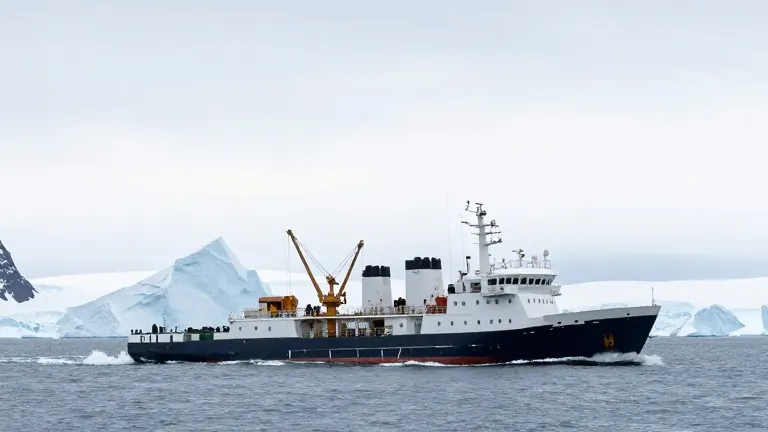
China also maintains a strong scientific presence in the Arctic. The country launched its 16th annual scientific expedition in July. For the first time, four research ships operated simultaneously in the region. These vessels passed through the US exclusive economic zone in the Bering Sea. Rear Admiral Bob Little of the Coast Guard stated that the service is actively responding to competitor activities in the increasingly contested area.
Washington has moved to formalize its security position in Greenland, an autonomous territory of Denmark. In September, the US, Denmark, and Greenland signed a trilateral security agreement. The pact replaces a 1951 treaty and prohibits non-NATO countries, specifically naming China and Russia, from building military bases or deploying troops on the island. The agreement also authorizes the expansion of the Pituffik Space Base.
The new treaty restricts foreign direct investment from non-NATO and EU nations in sensitive sectors like critical minerals and ports. China is designated as an Article X Investor, meaning its companies face default restrictions rather than open market access. This follows Denmark blocking Chinese acquisitions of three airports and a naval station in Greenland between 2016 and 2018. The treaty is permanent and includes provisions that bind Greenland to its security obligations if the territory becomes independent.
Analysts note that China remains engaged in the Arctic despite lacking full membership in the Arctic Council. Melting ice is opening new trade routes that reduce transit times between Asia, Europe, and North America. These corridors offer alternatives to southern lanes like the Suez Canal. Bobo Lu of the Lowy Institute described the Arctic as a planning priority for China's future rather than an immediate security concern.