F1 Weekend Investigation: Police Escorts in Austin Under Scrutiny After 200 Operators Identified
State and local agencies are reviewing complaints regarding private security personnel and out-of-town officers who accompanied race guests through the city.
By Olivia Miller ·
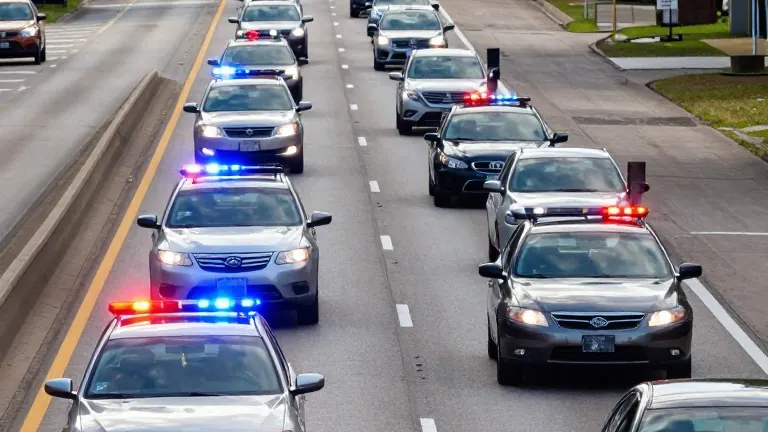
Austin’s Formula 1 weekend concluded with a formal review of the private vehicle escorts that moved guests through city streets. State and local law enforcement agencies are now investigating these operations after receiving complaints and preliminary data suggesting that some escorts involved out-of-town officers or private security personnel lacking law enforcement credentials.
Circuit of the Americas Chairman Bobby Epstein stated that approximately 100 private escort operators coordinated with the track to access a nonpublic entrance. Another 100 operators attempted to bypass the track’s security process and were denied entry. Officials do not have a definitive count of how many escorts actually operated on the streets or the identity of all companies involved.
Austin Police Chief Lisa Davis said the department learned that law enforcement officers from across Texas, and possibly the nation, participated in the escorts. Assistant Police Chief J.J. Schmidt said the department is working with the Texas Commission on Law Enforcement and the Texas Department of Public Safety to improve accountability. The Texas Department of Public Safety stated it provided one routine dignitary escort at the request of the dignitary for official duties, noting the escort was not directly related to the race.
The Texas Commission on Law Enforcement spokesperson Cade Andrews said the commission received complaints about the escorts, including vehicles that were unmarked or unconventionally marked. Andrews said staff have been in contact with Austin investigators reviewing the complaints. The commission will refer the complaints to the appropriate law enforcement agency. Andrews encouraged the public to file complaints with the commission or the local agency where the officer is employed, and to report any instances of impersonating a law enforcement officer.
Davis said the department heard that some escorts took individuals to restaurants rather than the racetrack. She stated, “It is not public safety when you are escorting someone to a restaurant, which we heard was happening.” Davis added that the department needs to understand more about these practices during large events. Police Department spokesperson Anna Sabana said some off-duty Austin officers participated in the escorts but did not provide an estimate of the number of officers involved. The department has contacted other area and state agencies to determine who else was involved.
Austin city rules require police escorts to be provided by off-duty, licensed law enforcement officers who work for agencies with jurisdiction in the city. The code defines an escort as someone compensated to drive a private motor vehicle or motorcycle with flashing lights and sirens. Officers must wear their uniforms and may not run red lights, though they may block intersections if they enter before the light turns red. Violations are Class C misdemeanors punishable by fines ranging from $300 to $500.
The Texas Transportation Code allows officers in escort vehicles with flashing lights and sirens to break certain traffic laws, including speed limits and turning restrictions, to facilitate traffic flow. This applies to funerals, oversized or hazardous loads, or other traffic disruptions for public safety purposes. Epstein said he believes escorts should be used for safety purposes rather than convenience. He identified the rogue, entrepreneurial operators as the source of public concern.
Cari Padula, an Austin content creator who has lived near U.S. 183 and Burleson Road for four years, said the escorts felt more disruptive this year than in previous years. She stated that she had to pull off the road multiple times during a single drive because escorts were driving on the shoulder without warning. Padula supported tighter regulations for these private operations.
Event organizers have limited authority to regulate or restrict private escort operations. State and local law enforcement agencies do not track the agreements between operators and venues. This lack of tracking leaves officials without a complete record of the weekend’s activity. The investigation will determine how to enforce existing rules and improve coordination between agencies for future events.