Senate Race: Trump Returns to South Carolina to Back Graham
The president visits a state where Democrats have not held a Senate seat for nearly 30 years, as he also addresses volatility in other midterm contests.
By Olivia Miller ·
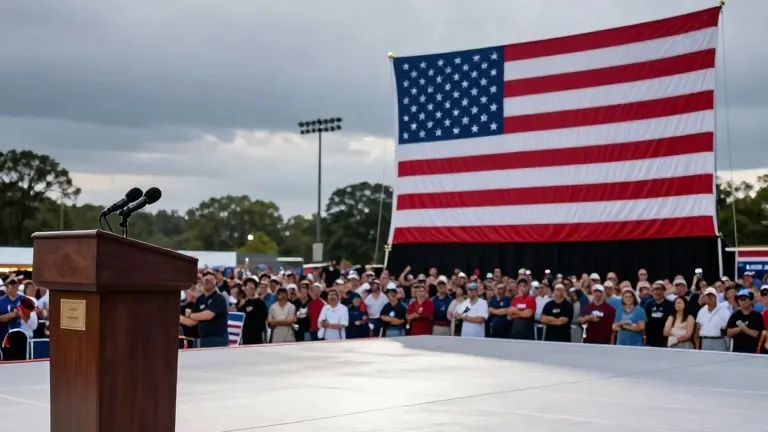
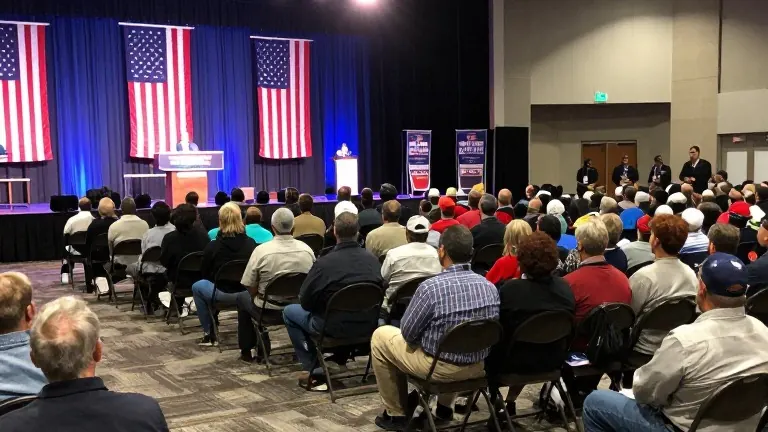
President Donald Trump returned to South Carolina on Thursday, marking his second visit to the state in one month. His presence signals growing concern among Republicans regarding Darline Graham's ability to defeat Democrat Annie Andrews for an open U.S. Senate seat. South Carolina has not sent a Democrat to the Senate in approximately 30 years, but Andrews, a pediatrician and former congressional candidate, is urging voters to choose a new direction.
Graham was appointed by Gov. Henry McMaster in July to fill the remainder of her brother, the late Sen. Lindsey Graham, term. She became the Republican nominee in August for the full six-year term. During the event, Trump praised Lindsey Graham's political career and stated that his sister "has got the gene." He also acknowledged his role in recruiting her for the race, telling her, "I got you into this thing, Darline."
Before Trump spoke, Graham thanked the president for delivering on long-standing promises. She warned that Andrews would discard these achievements. Andrews, campaigning in nearby Fort Mill on Wednesday, told voters they could remove her from office in six years if she failed to deliver. She added, "I promise that I won't let you down, that I'm going to win you all over."
Voter sentiment in the state shows a mix of loyalty and frustration. Brent Chaplin, a 37-year-old registered Republican working in finance, said it is difficult to support the party currently. He voted for Andrews and advised voters to look beyond party labels. Benjamin Updegraft, a 32-year-old software engineer, expressed annoyance that the position might remain within the Graham family, stating, "The Senate is not an inherited position."
Trump used the platform to discuss other tight races, including those in North Carolina, Michigan, Texas, Minnesota, and Alaska. He focused heavily on the Alaska contest after a report suggested a naming controversy involving the Democratic candidate, Mary Peltola. Gov. Mike Dunleavy ordered an investigation. Trump called the situation a conspiracy and questioned whether Peltola would be seated if she won. Peltola described the reports as a distraction from issues like the war in Iran.
The final days of the midterm campaign are characterized by rapid changes in strategy. A Trump rally scheduled for Saturday in Kansas has been moved to a virtual format to support Sen. Roger Marshall against Adam Hamilton. The president plans to hold similar tele-rallies in approximately 24 states in the coming days, including Texas, Iowa, New York, Pennsylvania, and Michigan.
Both parties are closely monitoring these developments as they determine how to allocate time and resources. The outcome of these contests will influence which party controls Congress, with both sides making last-minute adjustments to their outreach and messaging.