Google’s TPUs for AI workloads now run in Meta's data centers: TPUs sold to external customers for the first time, threaten Nvidia's market dominance
Google’s tensor processing units (TPUs) now serve AI in production at Meta through a new PyTorch-native version of the SGLang inference engine.
By Fatou Kim ·
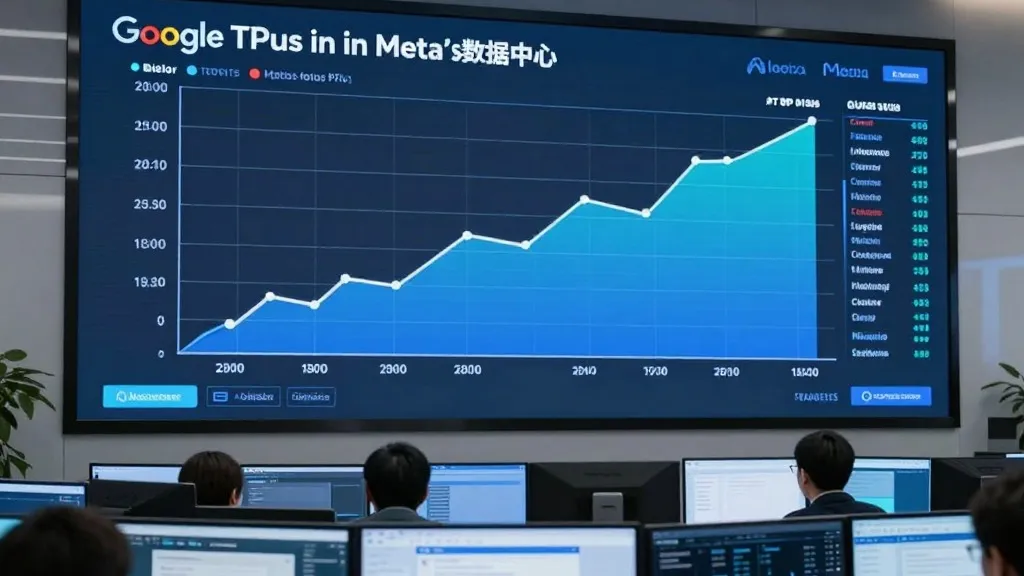
Google’s tensor processing units (TPUs), its custom AI chips, now serve AI in production at Meta (creator of the widely used PyTorch AI framework) through a new PyTorch-native version of the SGLang inference engine. A matching version of vLLM, another widely used inference engine, was also announced as open source.
Previously, both engines used Google’s own JAX AI framework to run on TPUs. The new versions allow the hardware to be a native option for PyTorch, mostly without rewriting.
SGLang-TorchTPU is running in production at Meta today after a close three-way collaboration between Meta, Google, and the SGLang team. That team works at RadixArk, a startup founded by SGLang’s creators, which built the engine with Google and Meta. The engine gives Meta a remarkably mature, PyTorch-native serving stack.
Jana van Greunen, director of PyTorch engineering at Meta, added in Google’s TorchTPU post that Meta cannot be constrained by a single hardware architecture and that TorchTPU enables us to deploy our PyTorch workloads to Google TPUs. Google said it co-developed TorchTPU with Meta’s PyTorch team.
This is not Meta’s first attempt at using TPUs. Google calls PyTorch/XLA, the older bridge from PyTorch to TPUs, a 'predecessor' to the new TorchTPU, and SemiAnalysis reported last year that Meta research teams used TPUs through this bridge from 2020 to 2023 before Meta canceled those contracts. Google’s PyTorch-on-TPU push was aimed mainly at Meta, which did not want to migrate to JAX.
Although it is unclear where Meta’s production TPUs sit, talks last year reportedly included Google Cloud TPU rentals in 2026 with purchases in 2027, and Meta later reportedly signed a multi-year rental agreement.
The announcement came one day after Amazon said it was open-sourcing TorchNeuron, its own native PyTorch backend for its Trainium2 and Trainium3 chips, at the same PyTorch Conference. Both moves appear to be aimed at loosening Nvidia’s software lock-in.