Hubble Rescue: NASA Seeks Commercial Proposals to Extend Telescope Life
The space agency issued a request for information on Thursday, asking firms to detail methods for reboosting, servicing, or deorbiting the aging observatory before 2032.
By Noor Phillips ·
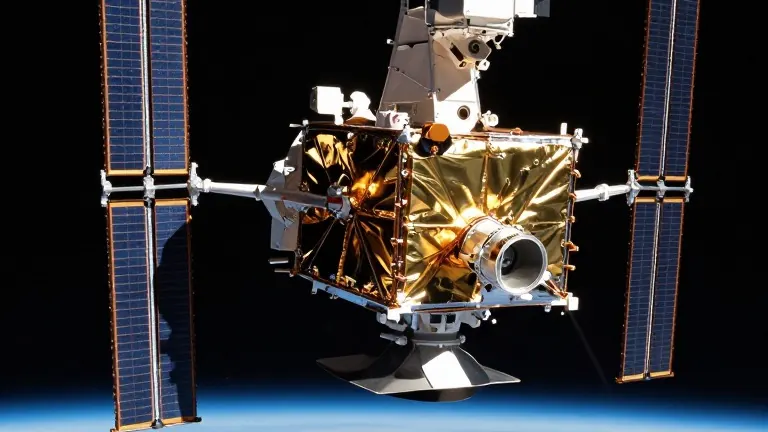
NASA issued a request for information on Thursday to solicit commercial concepts for the future of the Hubble Space Telescope. The observatory has operated for 36 years but continues to lose altitude without onboard propulsion. Left unattended, the telescope will reenter Earth's atmosphere between 2033 and 2034.
The agency last raised Hubble's orbit in 2002 during a Space Shuttle Columbia servicing mission. A final shuttle flight in 2009 did not increase the altitude, and the retirement of the shuttle fleet in 2011 left Hubble without a means for further adjustments. Since then, the telescope has declined from an altitude of 362 miles (583 km) to its current position at 292 miles (470 km).
NASA's document asks companies to describe current and near-term capabilities for three specific outcomes: reboosting, servicing, or controlled disposal. The primary requirement for a reboost is raising the orbit to at least 373 miles (600 km). The agency also seeks information on how to enhance the telescope's performance or guide it to a safe reentry if a boost is not feasible.
The request for information sets a target completion date of 2032 for any boost or servicing mission. NASA stated that the mission must not harm the telescope. Contractors would be responsible for providing the launch vehicle, the servicing spacecraft, mission operations, and crew if applicable. Companies have until November 30 to submit their responses.
NASA is not yet committing to purchase a rescue mission. Officials aim to identify interested parties, estimate costs, and determine which firms have a realistic chance of reaching the telescope in time. The agency noted that orbital predictions can shift based on solar activity, but current models point to a reentry window in the early 2030s.
A successful reboost to the required 600 km altitude would extend Hubble's operational life by at least 25 years. The telescope has no engines to adjust its trajectory, relying entirely on external intervention to avoid atmospheric decay. The next phase of the process depends on the quality of the commercial proposals submitted by the end of next month.