Israelis Vote as Netanyahu Faces Rival in Tight Race
More than 7.3 million Israelis are casting ballots Tuesday in an election that has become a vote of confidence in the prime minister following three years of war.
By Olivia Miller ·
Polling stations across Israel closed at 10 p.m. Tuesday as more than 7.3 million eligible voters cast their ballots in a national election. The vote is widely viewed as a referendum on Prime Minister Benjamin Netanyahu, who has led the country through the aftermath of the Hamas attack on October 7, 2023, and subsequent conflicts in Gaza, Lebanon, and Iran. With polls indicating a close margin, the result will likely trigger weeks or months of coalition negotiations among the roughly a dozen parties expected to win seats in the 120-seat Knesset.
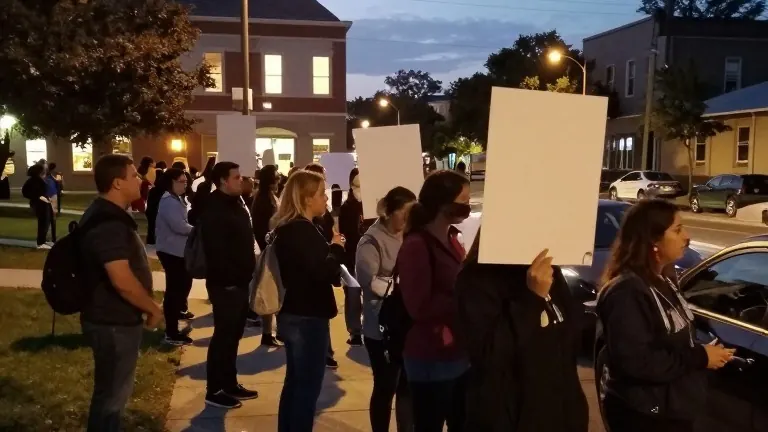
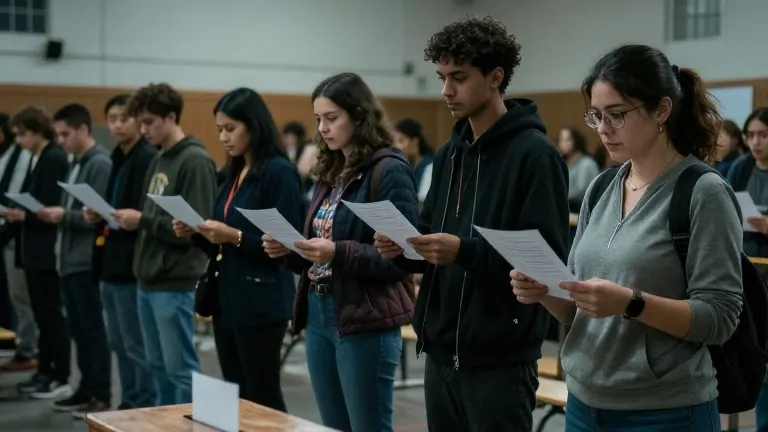
The atmosphere at polling stations was charged with emotion. In Kiryat Shmona, a city near the Lebanese border, a man tore down a poster of Gadi Eisenkot, the former military chief and Netanyahu’s main rival. In Tel Aviv, families of victims and former hostages observed a moment of silence. Yona Adam, whose son Mapal Adam was killed in the 2023 attack, urged voters to remember those who are no longer alive. In Jerusalem, voters at a school polling station expressed divided opinions; some sought change, while others, like reservist Nisim Cohen, said they trusted Netanyahu to continue the wars until they could sleep peacefully.
Eisenkot spent the morning meeting voters in Ofakim, a southern community hit by the October 7 assault. His campaign visited the area to highlight security failures that led to the deadliest attack in Israel’s history. Eisenkot, who lost his son and two nephews in combat in Gaza, has made Netanyahu’s refusal to hold a state commission of inquiry a central part of his message. His bloc argues that Netanyahu must be held accountable for the breakdown on October 7 and for failing to turn military gains into diplomatic results.
Netanyahu has dominated Israeli politics for nearly two decades. A poor showing could end the career of the 77-year-old prime minister. A victory would confirm his status as a political survivor. Although U.S. President Donald Trump endorsed Netanyahu earlier this month, the late timing was seen as a setback for the Likud leader, who had previously touted his close relationship with the American president as a key reason to vote for him.
Thousands of volunteer observers from groups like Elections Guards monitored the process. Eyal Sher, a volunteer, said he wanted to ensure procedures remained intact because he believes the current government is corrupt and will do anything to stay in power. Around 330,000 young Israelis who attended high school during the wars also cast their first ballots. The Central Election Committee reported that ballots are manually counted at each of the approximately 12,000 polling stations immediately after voting ends.
The campaign focused heavily on Netanyahu’s role in the October 7 security failure, his efforts to exempt ultra-Orthodox Jews from military service, and the 2023 judicial overhaul. There was little public debate about Israel’s wartime conduct in Gaza, despite an international arrest warrant for Netanyahu. Most Israelis support the occupation of much of southern Lebanon and parts of Syria, as well as the two wars launched against Iran. The next step is the manual counting of ballots, which will determine which parties enter the Knesset and begin coalition talks.