Midwest voters face state ballot measures
Kentucky, Indiana, and Ohio residents cast ballots on Tuesday, Nov. 3, regarding executive powers, bail standards, and identification rules.
By Fatou Kim ·
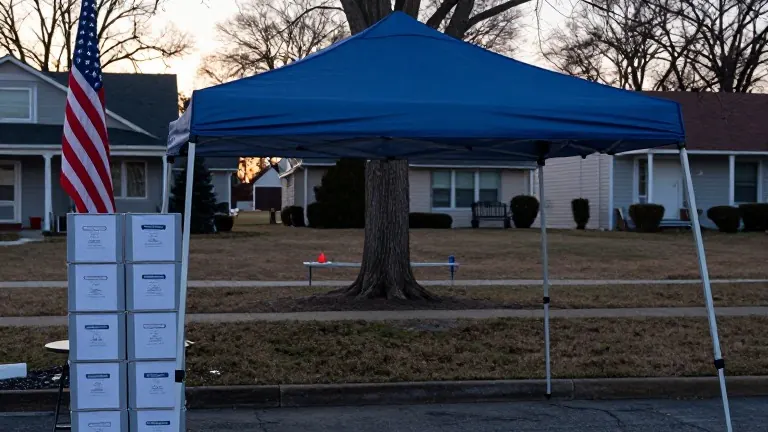
Voters in Kentucky, Indiana, and Ohio cast ballots on Tuesday, Nov. 3, to decide on state constitutional amendments alongside federal and local races. Early voting has concluded in all three states, leaving Election Day and mail-in ballots as the remaining options for participation.
The Kentucky ballot features Amendment 1, which proposes limits on gubernatorial pardoning powers. The measure, introduced by State Sen. Chris McDaniel, R-Ryland Heights, would amend Section 77 of the state constitution. Currently ratified in 1891, that section allows the governor to remit fines, commute sentences, and grant reprieves. Under the proposed change, the governor could not grant pardons or commute sentences during a period starting 60 days before a gubernatorial election and ending on the fifth Tuesday after the election.
Indiana voters face two public questions regarding the state constitution. Public Question 1 addresses bail eligibility for suspects charged with crimes other than murder or treason. A yes vote would allow judges to deny bail if the state proves by clear and convincing evidence that no release conditions would reasonably protect public safety. Public Question 2 modifies residency rules for city and town court judges. Currently, Article 6, Section 6 requires these judges to live in the city or town where they preside. The amendment would permit them to reside in the county where the court is located or in the closest bordering county.
Ohio Issue 3 focuses on voter identification requirements. Secretary of State Frank LaRose proposed the amendment to add Section 5 to Article V of the Ohio Constitution. The measure requires voters to present an approved government-issued photo ID to vote in person. It also establishes identification requirements for mail-in voters, allowing a signature and one other unique identifier as an alternative in some cases. Approved forms of ID include an unexpired Ohio driver license, state identification card, United States passport, military ID, National Guard ID, or Veterans Affairs ID.
Proponents of Issue 3 argue the amendment protects elections from impostors. Opponents contend that voter impersonation is rare and that the measure complicates the voting process. Ohio law already mandates photo ID for in-person voting, so the primary impact of the amendment, if passed, would fall on mail-in voters. A majority yes vote would enact the change immediately.
Polling hours vary by state on Election Day. In Kentucky, polls open at 6 a.m. and close at 6 p.m. Mail-in ballots must be received by 6 p.m. on Nov. 3. In Indiana, polls also open at 6 a.m. and close at 6 p.m., with absentee ballots due by the same time. In Ohio, polls operate from 6:30 a.m. to 7:30 p.m., and absentee ballots must be delivered to the county board of elections by 7:30 p.m.
Voters in Kentucky and Indiana mark yes or no on their ballots to indicate support for or opposition to the proposed constitutional changes. In Ohio, a majority yes vote is required for adoption. The decisions will alter state laws and constitutional provisions in all three states upon ratification.