New study reveals Lane Parke has 250 extra parking spots during peak hours
City officials plan to install new signage and automated ticketing systems to manage the space, despite merchant complaints about congestion.
By Fatou Kim ·
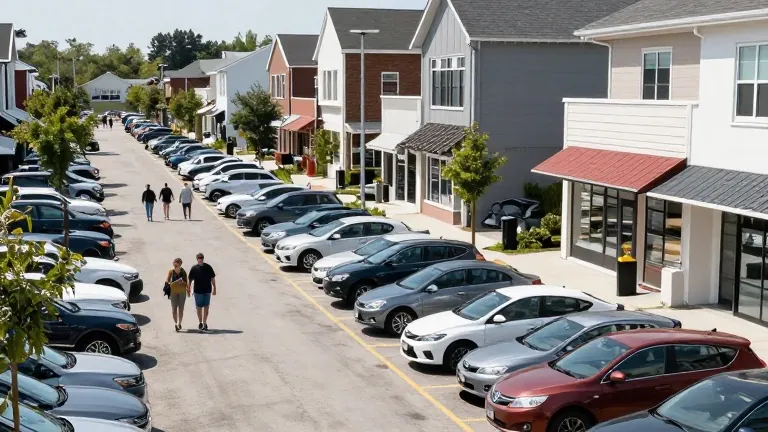
Shoppers in Mountain Brook’s Lane Parke district have long complained about a lack of available spaces, yet a new city-commissioned analysis indicates the development actually possesses surplus capacity during its busiest periods. The study, conducted by Sain Associates, found that the shared parking model established when the mixed-use complex opened in 2013 is functioning as designed, with residential and grocery areas freeing up spots for retail customers throughout the day.
The tension between physical availability and user experience has defined local discourse for years. Merchants and residents frequently voiced frustration to city leaders, arguing that the inconvenience of walking to distant lots drove potential customers away. These complaints prompted the municipal government to order the formal investigation to determine if the district needed additional infrastructure or simply better management of existing resources.
City Manager Steve Boone acknowledged that the findings were unexpected. "I guess because we hear that so much from shoppers and business owners, that’s probably the perception that we had," Boone said. He noted that the extra spaces are located at the Lane Parke Apartments and the Publix parking lot, a distance he estimated at a quarter-mile. While the spots exist, they are often out of sight, leading to the "out of mind" phenomenon where drivers do not realize they are open to the public.
Local business owners maintain that the data does not reflect daily reality. Hannah Macon, a bartender at The Rougaroux, stated that customers arrive irritated and sometimes choose other venues because the nearby spots fill quickly with vehicles visiting adjacent businesses. "You’re trying to park in an alley or walking half a mile to try to get over here. It’s a lot," Macon said. She argued that the friction costs businesses revenue, particularly from older patrons who find the walk difficult.
David Coggins of Sain Associates, the firm that produced the report, described the situation as common in thriving urban centers. He emphasized the trade-off between space allocated to people and space allocated to vehicles. "There’s no denying that we would all love to be able to park a few steps away from our favorite establishments," Coggins said. He added that the challenge lies in striking a balance between pedestrian density and vehicle storage.
City officials are moving to address the perception gap through physical and digital infrastructure changes. Mayor Graham Smith said the city hopes new enforcement measures will maintain movement throughout the development. To execute this, the city is replacing manual tire-chalking with a license plate recognition system. This technology will digitally timestamp vehicles and automatically generate tickets for those exceeding time limits, allowing officers to cover more ground efficiently.
A key logistical change is the transfer of ownership for the streets within the Lane Parke district. These roads have historically been privately owned by Evson Inc. An agreement to dedicate them to the City of Mountain Brook is expected to be finalized by the end of 2026. This transfer will grant the city the legal authority to enforce time limits and other parking regulations directly, rather than relying on private property rights.
Signage is also being updated to direct drivers toward the underutilized apartment and grocery lots. Boone said the city recognizes that weather and heat can deter walking, but clearer directional signs should help. "If you’re a shopper, perception is reality," Boone said. "This study has at least helped us understand that it is just that: a perception that is not reality."
More Business · Consumer Alerts · Report a business · Got a Story?