Thumbs-up emoji is a source of workplace tension
A 2025 survey found that 38% of workers use the symbol for agreement, while younger colleagues often interpret it as cold or dismissive.
By Fatou Kim ·
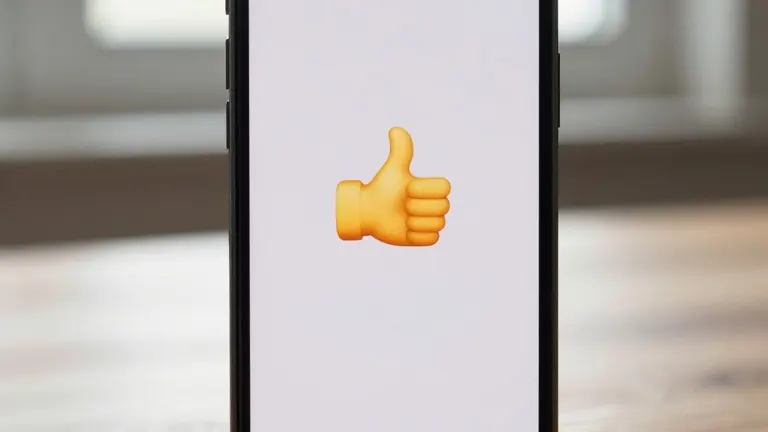
A 2025 survey reveals that nearly 4 in 10 workers, or 38%, use the thumbs-up emoji to signal agreement in digital communication. However, a growing number of younger colleagues perceive the same symbol as dismissive or sarcastic. This generational gap has created confusion about the basic meaning of a standard digital reaction.
The ambiguity stems from the fact that the symbol replaces a wide range of face-to-face responses. Linguist Lauren Gawne, who conducted the research for the survey, explained that in person, people might nod, speak, or simply begin a task. In text, these options are flattened into a single choice. Users then project their own interpretations onto that limited signal.
Singer Kelly Clarkson recently demonstrated this ambiguity on social media. She called out a New York City store that did not sell her a desired animatronic bird. Her post read, "Sure, it wasn’t for sale. That’s the narrative Art of Play is gonna go with," followed by a thumbs-up emoji. In this context, the symbol signaled sarcasm rather than the standard meaning of approval.
A post on the subreddit "IsThisUnprofessional" illustrates the workplace friction. A 35-year-old employee described using the reaction to mean "Got it, no notes, we’re good." A younger coworker later explained that the bare thumbs-up reads as cold, comparing it to an eye roll. The older employee wrote, "Now I’m sitting here wondering if I’ve been low-key insulting people for years and nobody bothered to tell me."
Etiquette expert Nick Leighton noted that trouble begins when clarity is lacking. He stated that in a work setting where efficiency is prized, the reaction is likely just an acknowledgment. However, if a boss is known for passive-aggressiveness, the meaning changes. Leighton pointed out that the symbol becomes particularly hostile when it is not proportional to the message. If a person sends a long, heartfelt paragraph, a single tap-back reaction may feel like an insult.
The issue is compounded by the low effort required to send the reaction. Apple provides a tap-back feature for iPhone users, which allows a quick response. This speed can imply that a friend barely read the message. Leighton advised people to assume the best intentions. He said, "Rare is the person who’s genuinely going out of their way to be rude."