Voters in key states demand tighter AI rules before November
New data shows 90% of respondents in Iowa and Ohio support increased oversight, shifting the midterm debate.
By Noor Phillips ·

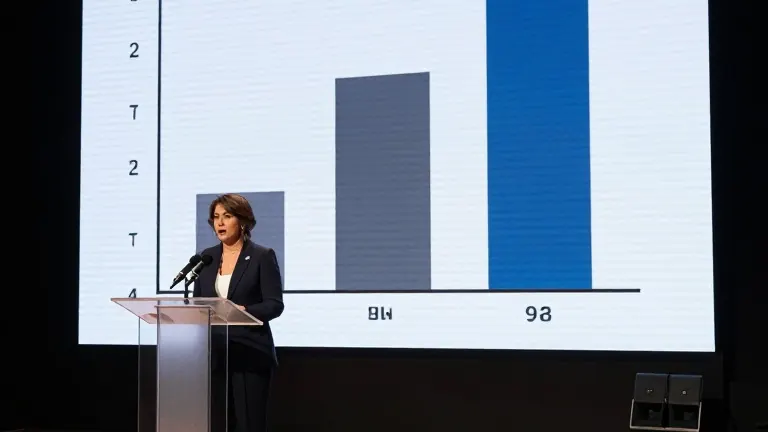
Candidates in Iowa and Ohio face a stark new challenge this fall: 90% of voters in those states want stricter rules for artificial intelligence. A recent poll released by SEMAFOR confirms that a heavy majority of respondents favor greater government regulation. This shift forces lawmakers to confront technology that was once viewed as a pure economic boost.
Chris Borick, a political science professor at Lehigh University, observed that the political tone regarding AI has flipped. For decades, politicians treated new technology as a standard part of the economic growth package. Over the past year, that optimism has faded. Borick noted that current political positions are often neutral or explicitly negative.
"We like tech traditionally as part of our political economy. That’s really changed in the last year, where you see a much more neutral and sometimes negative political position on AI," Borick said. He added that this change reflects widespread public anxiety about how the technology impacts jobs and local communities.
The backlash is not limited to one party. Shobita Parthasarathy, a public policy professor at the University of Michigan, pointed out distinct strategies between Republicans and Democrats. Parthasarathy argued that Republicans have maintained closer ties with AI firms for over a year. As a result, many Republican candidates focus narrowly on the cost of the technology. They are less likely to discuss a pause or moratorium on development.
Democrats have also tapped into voter concerns, though their approach differs from the GOP. The divergence is visible in how each side frames the debate. Republicans aim to limit the scope of the conversation to economic metrics. Democrats are more open to broader societal impacts.
The issue has the potential to reshape local politics as well. Borick reported that conservatives and liberals often unite in opposition to new data centers. These facilities are frequently the focal point for community disputes. When voters from opposite ends of the spectrum align on a single issue, traditional voting patterns can shift.
The poll data from Iowa and Ohio provides a concrete measure of this sentiment. Both states are battlegrounds for the upcoming midterm elections. The high percentage of voters demanding regulation suggests that AI policy is no longer a secondary issue for candidates running for Congress and state legislatures.