Democrats seize both chambers of Congress in decisive midterm victory
The party of the president loses at least 43 House seats and seven Senate seats, marking a historic wave of change in state governments as well.
By Noor Phillips ·
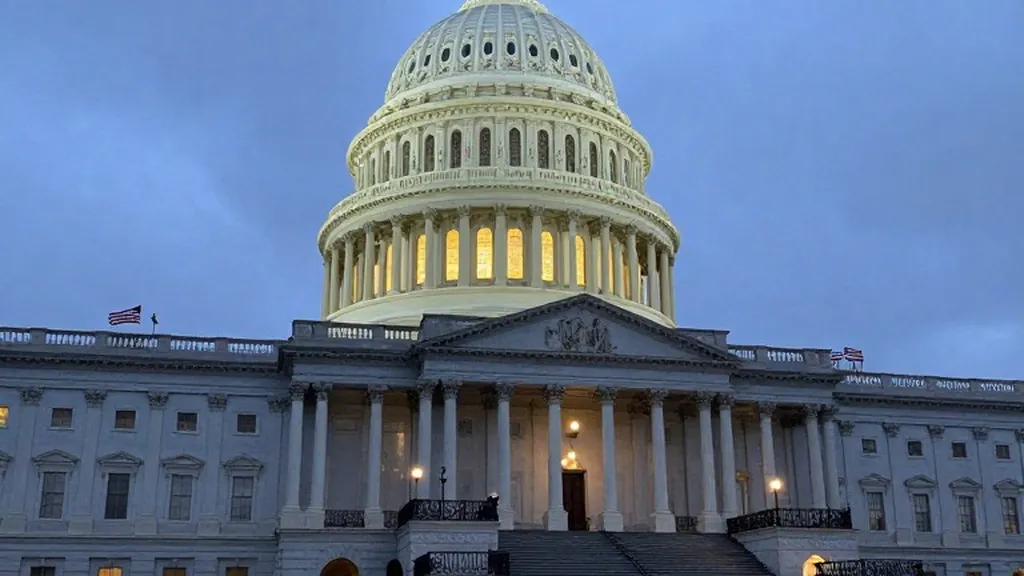
Democratic candidates have secured majorities in both the U.S. House of Representatives and the U.S. Senate following the midterm elections held on Tuesday, November 3, 2026. The results, compiled by Ballotpedia as of 4 p.m. EST on November 6, indicate that Democrats will hold at least a 250 to 157 majority in the House and a 54 to 44 majority in the Senate. This outcome represents a significant shift in the balance of power in Washington, as the party currently in the White House faces a Congress controlled by its opposition party.
The scale of the Democratic gains in the Senate is particularly notable for historians of American elections. Republicans suffered a net loss of at least seven U.S. Senate seats, all of which were previously held by their party. According to the data, this level of loss places the 2026 election in the top 20% of election years in terms of seat swings against a sitting president's party. Analysts have defined this threshold as a wave election, a term used to describe periods where voters make substantial changes to the partisan composition of government.
In the U.S. House, Democrats picked up at least 43 seats. Of these, 42 were previously held by Republicans and one was held by an independent candidate. While the net loss of 42 seats is a substantial defeat for the Republican Party, it falls short of the 48 seat loss required to qualify as a wave election by the same historical standards used for the Senate. However, with some races still being certified, the final count could potentially shift these numbers in the coming days.
The impact of the election extends beyond federal offices to state governments across the country. Democrats won a majority of governorships for the first time since before the 2010 elections. As of the reporting deadline, Democrats had won 22 of the 36 gubernatorial races, while Republicans had won 12. Two races remained uncalled, with one previously held by a Democrat and one by a Republican. Five governorships changed party control, with all shifts moving from Republican to Democratic leadership.
State legislative chambers also saw significant movement toward Democratic control. Democrats won 46 of the 88 state legislative chambers that were on the ballot, compared to 39 for Republicans. One chamber went to a bipartisan coalition, and two remain uncalled. Twelve legislative chambers changed party control, with all 12 shifting to Democratic hands. This broad sweep of state legislatures suggests that the policy agenda of the new Congress may be mirrored in statehouses across the nation.
The concept of the trifecta, where one party controls the governorship and both legislative chambers, also shifted dramatically. In the 44 states where the status of the trifecta had been decided, Democrats controlled 20, Republicans controlled 16, and 8 states had divided governments. Eleven states changed their trifecta status during this election cycle. Six states moved from divided governments to full Democratic trifectas, while five states shifted from Republican trifectas to divided governments. This indicates a consolidation of power for Democrats in several previously mixed or Republican strongholds.
Beyond the trifecta, the broader triplex status, which includes the attorney general and secretary of state positions, also favored Democrats. Democrats won 21 of the 34 attorney general races and 21 of the 33 secretary of state races. In both categories, every office that changed party control shifted from the Republican Party to the Democratic Party. These positions are crucial for enforcing state laws and administering elections, giving the new Democratic majorities significant administrative leverage in state governments.
For President Donald Trump, the results signal a challenging period ahead. His party's deep losses in the midterms have led to the GOP losing control of both chambers of Congress. This legislative check on presidential power is expected to influence the administration's approach to policy, particularly on issues where the president has sought swift action. The loss of the Senate majority is particularly significant because it affects the president's ability to confirm judicial nominees and pass legislation that requires a supermajority to overcome potential procedural hurdles.
The election results also have implications for state-level politics, where Democrats now hold a plurality of trifectas. This means that in many states, the executive, legislative, and judicial branches (where applicable) will be aligned under Democratic leadership. This alignment can facilitate the passage of state laws on issues such as education, infrastructure, and taxation without the need for bipartisan compromise. For voters in these states, the change in control may lead to visible policy shifts in the coming months.
The race for the U.S. Senate seat in Mississippi remains a focal point of the post-election period. Democrat Scott Colom has not yet been officially declared the winner, but local officials are still tallying absentee and provisional ballots. Colom has the potential to become the first Black senator from the state since the post-Civil War Reconstruction era. His opponent, Republican Senator Cindy Hyde-Smith, has not appeared publicly since election night, though she has posted on social media that the election is not over and that her team is monitoring the remaining ballots to protect the integrity of the process.
The finalization of these results will determine the exact composition of the new Congress and the state governments. As ballots are counted in the remaining undecided races, the margin of victory for Democrats may expand or narrow slightly. However, the current trend indicates a historic realignment of power in American politics, with Democrats gaining control of the federal legislature and a majority of state executive offices. This outcome sets the stage for a new phase in national governance where the party of the president must work with an opposing majority in both houses of Congress.