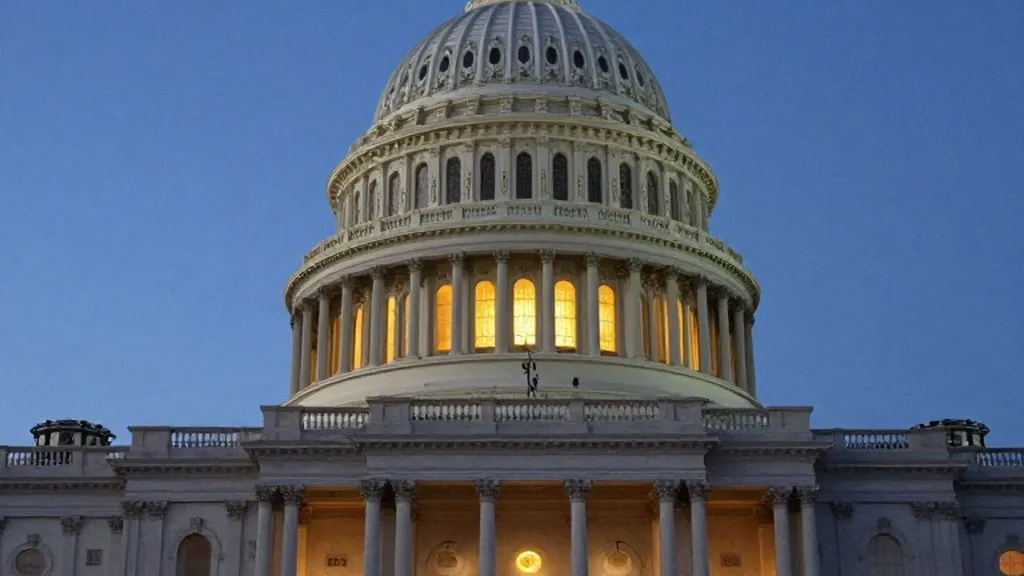
Midterm Results: Democrats Defy Historical Pattern of Loss
Democrats captured control of both chambers of Congress, securing a majority in the House and Senate while Republicans retained significant ground in key districts.
By Fatou Kim ·

Voters across the United States delivered a decisive shift in power during the midterm elections held on Tuesday, November 3, 2026. The results, which were largely finalized by the evening of November 6, show that the Democratic Party has won majorities in both the U.S. House of Representatives and the U.S. Senate. This outcome marks a significant departure from the political landscape established in the previous two years, as Democrats now hold at least a 250-157 majority in the House and a 54-44 majority in the Senate. These figures represent the minimum counts based on results reported as of 4 p.m. Eastern Standard Time on November 6, with some races still in the process of final certification.
The shift in the House is particularly stark, with Democrats picking up at least 43 seats. Of these gains, 42 were previously held by Republicans and one was held by an independent. This net loss of at least 42 seats for the Republican Party is substantial, though it falls just short of the 48-seat threshold that analysts have previously defined as a wave election. Despite falling slightly below that specific benchmark, the scale of the turnover underscores the intensity of the electoral environment and the responsiveness of voters to the political climate of the mid-term period.
In the Senate, the Democratic gains were equally decisive. The party secured seven additional seats, all of which were previously occupied by Republicans. This net loss of at least seven Senate seats places this election cycle within the top 20% of all midterm election years in terms of seat swings against the president's party. Historically, the party holding the presidency tends to lose seats in midterms, and this year’s results confirm that pattern, albeit with the added magnitude of a wave-level swing in the upper chamber.
Beyond the federal chambers, the Democratic Party also achieved a broader victory at the state level. For the first time since before the 2010 elections, Democrats won a majority of governorships. They also secured a plurality of state government trifectas, meaning they now control the governor’s office, the state senate, and the state house in a majority of states. Additionally, Democrats won a majority of state legislative chambers. As of 4 p.m. Eastern Standard Time on November 6, the trifecta status had been decided in 44 of the 46 states, indicating that the overall shape of state-level power has shifted significantly toward the Democratic Party.
This outcome challenges the traditional narrative that midterms are invariably a referendum against the incumbent president’s party. While the president’s party did lose seats, the scale of the loss suggests that voters were motivated by factors beyond simple partisan fatigue. The combination of federal and state-level gains indicates a coordinated movement of power that will shape the legislative agenda for the next two years. The new Congress will convene in January, at which point Democrats will assume control of both chambers, ending the period of divided government that has characterized the previous session.
The implications of these results are immediate for the balance of power in Washington. With Democrats holding the House, the committee leadership will change, allowing for new investigative powers and oversight of the executive branch. In the Senate, the Democratic majority of 54 seats provides a narrow but functional control, which will be critical in confirming nominees and passing legislation. The Republican Party, while losing ground, retains a significant presence in the House with at least 157 seats, ensuring that bipartisan cooperation may still be necessary for major legislative initiatives.
Analysts note that the specific numbers of seat changes reflect a complex voting pattern. The fact that Democrats won a plurality of trifectas suggests that the shift was not uniform across all regions. Some states may have seen tighter races or different outcomes than others, contributing to the overall aggregate numbers. The election results highlight the importance of state-level politics in shaping the federal landscape, as control of state legislatures often determines redistricting and state-level policy priorities.
The transition of power will be a focal point for political observers in the coming weeks. The new majority in Congress will likely move quickly to set its agenda, focusing on areas of contention with the executive branch. The Republican minority, led by House Speaker Mike Johnson and Senate Majority Leader John Thune in the current term, will prepare for a role as the opposition party. This shift sets the stage for a new dynamic in Washington, where legislative priorities and executive actions will be tested against the new congressional makeup.
Ultimately, the 2026 midterm elections have realigned the political map of the United States. The Democratic Party’s victory in both chambers and in a majority of governorships signals a clear mandate for change from the electorate. While the historical pattern of the president’s party losing seats was upheld, the magnitude of the loss this year was notable. As the new Congress prepares to convene, the focus will turn to how these new majorities navigate the complexities of governance and address the issues that drove voters to the polls this November.