El Niño rains flood Southwest, killing one and stranding voters
Record rainfall has forced evacuations in Colorado, New Mexico, Arizona, and Utah, complicating voting efforts for residents of Pagosa Springs.
By Olivia Miller ·
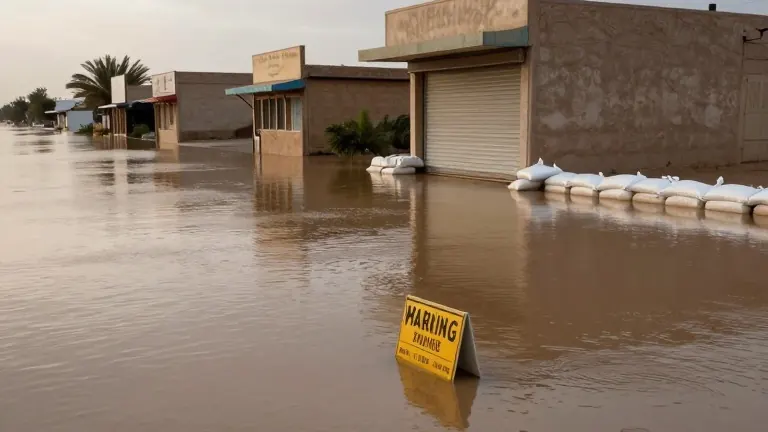
Unusually heavy rain has battered the arid Southwest this week, killing at least one person and forcing hundreds to flee their homes. The flooding, driven by the El Niño weather pattern, has left communities from the Four Corners region to central Arizona dealing with record breaking precipitation and disrupted infrastructure.
The National Weather Service estimates up to 4 inches of rain fell across the Four Corners area, where New Mexico, Arizona, Colorado, and Utah meet. Former NOAA chief scientist Ryan Maue calculates that more than 20 trillion gallons of rain have soaked the region and Nevada over the past two weeks. This volume has overwhelmed local drainage systems and rivers, prompting swift-water rescues in multiple states.
In Pagosa Springs, Colorado, a town of roughly 2,000 residents, the San Juan River crested at 16.81 feet late Sunday night before receding Monday. This level was slightly below the catastrophic 1911 flood mark but still inundated downtown streets. The Colorado Secretary of State's office has arranged alternative voting plans for residents who were evacuated or stranded, allowing mail ballots to be returned to any drop box or vote center in the state by 7 p.m. on Election Day.
Conditions remained severe in other areas. Durango police Chief Brice Current reported that many residents along the Animas River were still stranded in their homes on Monday. In Flagstaff, Arizona, meteorologist Jennifer Tate noted the rain was a broad system rather than localized. The city recorded its wettest November 1 on record, with 5.15 inches of rain falling over two days. Police recovered the body of 73-year-old Williams Singavarapu in a drainage tunnel Monday, and a second man was found dead in a nearby drainage area.
Further south and east, the impacts continued. Officials in Sedona, Arizona, ordered evacuations near Oak Creek after floodwaters trapped residents. In the Pinetop-Lakeside area, manhole covers popped up and sewage backed into homes due to the volume of water. In Utah, Ryan Benally, a professor at Utah State University, built dirt berms to protect his parents' home near Montezuma Creek. He reported that emergency access routes for remote residents had washed out, leaving families cut off from supplies.
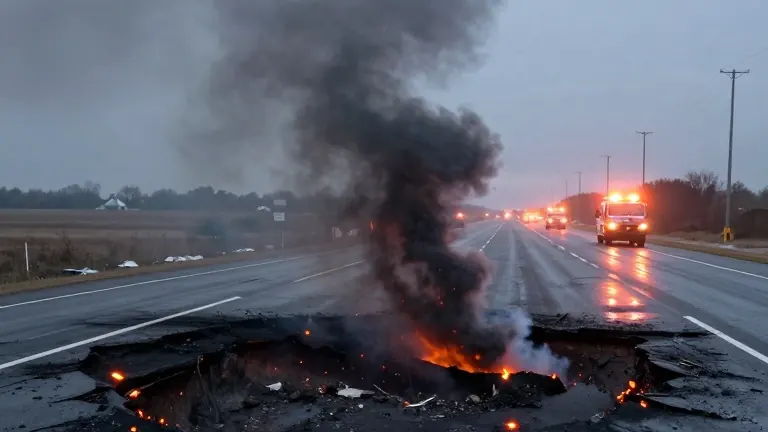
The flooding has also affected transportation. Highway 160 remained closed in Colorado, and parts of a main highway between Flagstaff and Sedona were washed out. In Pagosa Springs, bridges leading out of the Aspen Springs subdivision were impassable, leaving residents like Deanna Chiappetta isolated. She noted that while her property was spared, campers were washed away and the foundation of a local museum was damaged. The town had just lifted an evacuation order from previous flooding the week prior before reimposing it Saturday.