Fuel costs spike 72 percent, driving $343 million hit to Arkansas agriculture
Farmers are swapping rice for soybeans while facing rising fuel and fertilizer bills that have outpaced federal relief efforts.
By Noor Phillips ·
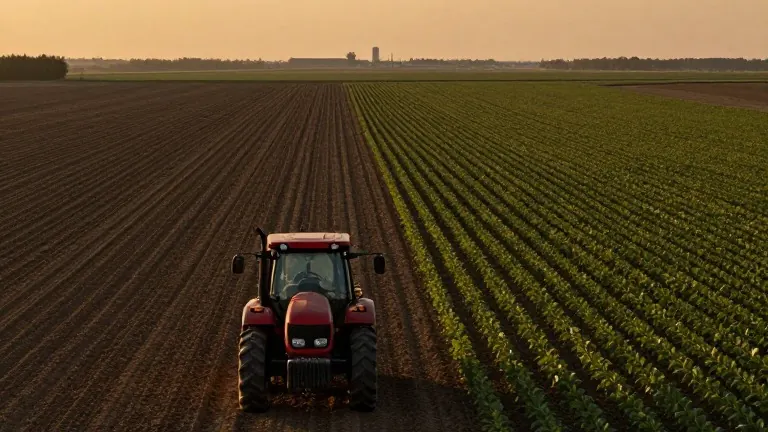
Diesel expenses have risen 72 percent above budgeted levels for Arkansas farmers this year. This spike translates to an additional $343 million in costs for the state alone, according to data from Ryan Loy, an extension economist at the University of Arkansas. The increase occurred across planting, growing, and harvesting seasons, placing direct financial pressure on operations that are already facing tight margins.
The cost surge coincides with a strategic shift in crop production. Paul McKinney, a farmer in northeast Arkansas, stated his family will plant significantly less rice next year. Rice has been grown on their land for four generations, but the family is moving toward soybeans to reduce input costs. McKinney described the change as a necessary response to economic realities rather than a preference. He recalled his son playing in flooded rice fields as a child, comparing the experience to a 40-acre swimming pool, but said those days are fading for many local growers.
Loy attributed the expense increases to a combination of long-term factors and recent conflicts. He cited the trade war with China that began in 2018, the war in Ukraine, and 2025 tariffs as initial drivers. A drought across the US heartland, which Loy noted is worsened by climate change, added further strain. The war on Iran intensified these pressures when the Strait of Hormuz was blocked, causing urea fertilizer prices to peak 39 percent above budgeted amounts just as farmers were planting in the spring.
Political stakes are high in agricultural regions as the midterm elections approach. Democrats are expected to gain seats, with observers watching Texas and Kansas for potential Senate flips. In the House, Wisconsin’s Third and North Carolina’s First districts could determine control. Despite these national trends, many rural areas remain firmly Republican. This dynamic creates challenges for Hallie Shoffner, a sixth-generation farmer who left her 2,000-acre operation last year to challenge Senator Tom Cotton in Arkansas.
Shoffner’s campaign focuses on rising costs, which she says made the numbers stop working for her family. She stated she decided to fight politically if she could not farm. Her platform includes ending the war on Iran, creating stable trade policies, and passing a new Farm Bill. Cotton did not respond to a request for comment. Shoffner’s campaign has been outspent by Cotton’s, which has received funding from interest groups and corporate leaders.
Federal relief has attempted to address the burden. President Donald Trump announced an $8 billion fuel relief program for farmers last week. This follows $12 billion in tariff-related aid distributed in 2025. McKinney, a member of the Arkansas Farm Bureau, said the announcement was welcome but expressed hope for longer-term solutions. He noted that farm bankruptcies for the first three quarters of 2026 were up 19 percent compared to the same period last year, according to the University of Arkansas’ National Agricultural Law Center.
Polling suggests some movement in rural voting patterns. A September survey from Purdue University found that a majority of farmers believe the country is on the wrong track. However, Michael Shepherd, a political scientist at the University of Michigan, noted that many rural voters remain committed Republicans whose choices are not highly responsive to agricultural economic shifts. Shepherd observed that all indications suggest a major shift away from the president’s party in recent history, particularly in races like the one for Arkansas’ second congressional district, where Democrat Chris Jones is a candidate.
More Business · World news · Consumer Alerts · Report a business · Got a Story?