Israelis Weigh a Decade of Leadership in a Tight Electoral Race
A fractured electorate faces a choice defined more by loyalty to the incumbent than by traditional party lines, with polling showing a nearly even split.
By Olivia Miller ·
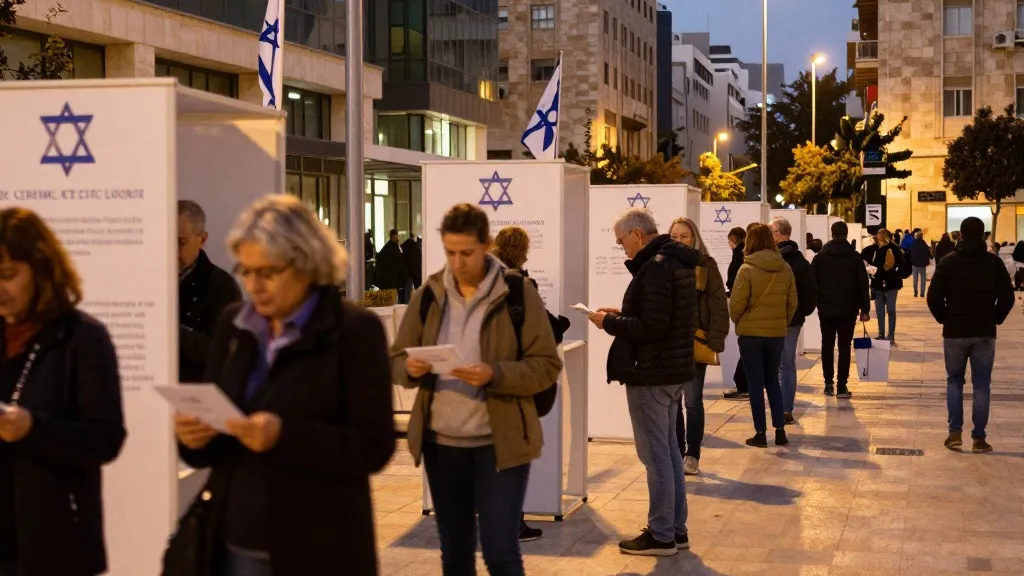
The political landscape in Israel is shifting toward a binary choice that centers on one individual rather than ideological camps.
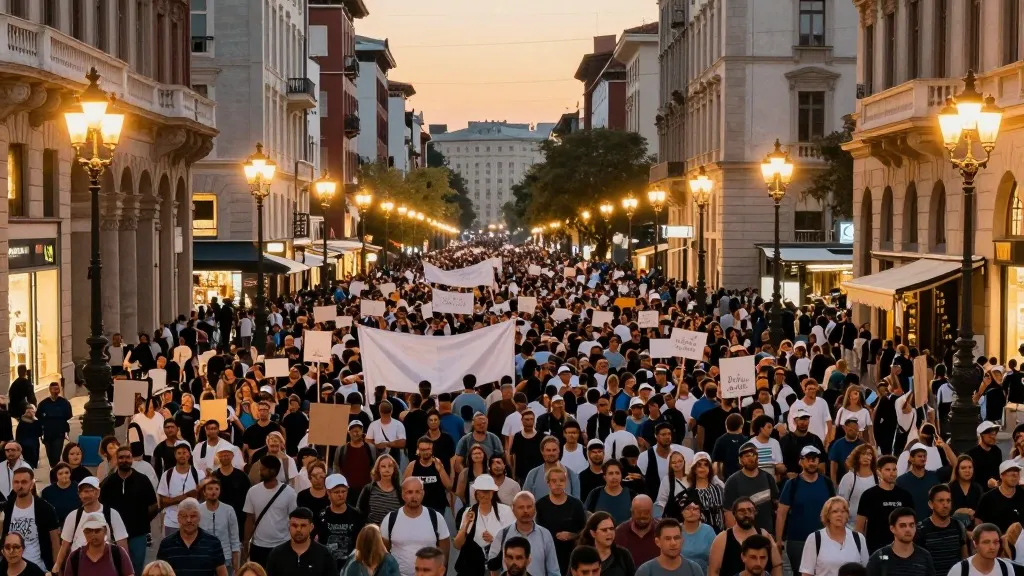
Voters head to the polls on Tuesday in a contest that polls describe as a close race between those who support the current government and those who oppose it. The two major blocs are less about left versus right and more about a personal referendum on the leader who has held the premiership for nineteen of the last thirty years. This dynamic has created a highly polarized environment where the incumbent’s presence defines the terms of the debate for every other candidate.
The numbers suggest a tight finish that could hinge on a single seat in the 120-member parliament. Pro opposition forces are expected to outpoll the current government’s bloc but may still fall short of a clear majority. This mathematical reality forces a strategic calculation about coalition building. The outcome will likely depend on whether anti incumbent Jewish parties will form a governing alliance with mainly Arab parties, a move that has been a focal point of media coverage and public discourse in the closing weeks.
Gadi Eisenkot, the leading opposition challenger, presents a stark contrast to the seasoned politician he faces. A former chief of staff of the Israel Defense Forces, Eisenkot entered politics only four years ago and is the son of working-class parents. His party, Yashar, which translates to straight or direct, campaigns on a platform of honesty and term limits. At a recent rally in Modi'in, he spoke plainly to supporters who praised his direct style. One attendee, Noa Sadeh, noted that she is tired of politicians who focus on rhetoric and wants someone focused on execution.
The opposition is not a monolith, as it includes former prime minister Naftali Bennett and Avigdor Lieberman. Both are figures from the nationalist right who once worked closely with the current leader before their alliances dissolved. On the far right, Itamar Ben-Gvir’s party frames the race as a battle to keep the center from drifting too far left. Yishai Fleisher argued in Bet Shemesh that the current leader needs to be pulled to the right, advocating for more settlements, a ministry for the voluntary departure of Palestinians, and the death penalty.
The stakes are high given the recent history and current challenges facing the country. The government’s tenure has been marked by the deadliest attack in the nation’s history on October 7, 2023, and a subsequent war in Gaza that resulted in the deaths of more than 70,000 Palestinians. Israel states that a third of these casualties were Hamas combatants, but the militant group was not eradicated, and the nation’s international standing has taken a hit. The incumbent also faces domestic issues, including the fallout from attempts to curb the supreme court, the Qatargate affair, and an ongoing corruption trial.
Despite these challenges, the incumbent’s base remains loyal. Allies maintain that military and intelligence chiefs kept him uninformed about the October 7 attack, a claim that has not been substantiated. He is widely regarded as a skilled coalition builder who may outmaneuver rivals in post-election negotiations. Pro government media, particularly Channel 14, have kept the opposition on the defensive, though a recent incident where a host called Eisenkot a Moroccan monkey sparked debate over the opposition’s resilience.
External factors may tip the balance in a razor-thin margin. Many liberal and secular expatriates are traveling home to vote, a demographic that standard polls often miss. This influx could be decisive if the result turns on a single seat. The mood is mixed, as seen in a widely shared video of young Israelis singing a peace song at a Negev festival. This sentiment, combined with the return of expatriates, suggests that for some, the era of long-term leadership may be approaching its conclusion.
More Politics · World news · Report a business · Got a Story?