Madrid Crowds Demand Security for Spain's Aging Pension System
Twenty-five thousand demonstrators marched through the capital to protect inflation-linked benefits as the general election approaches next month.
By Noor Phillips ·
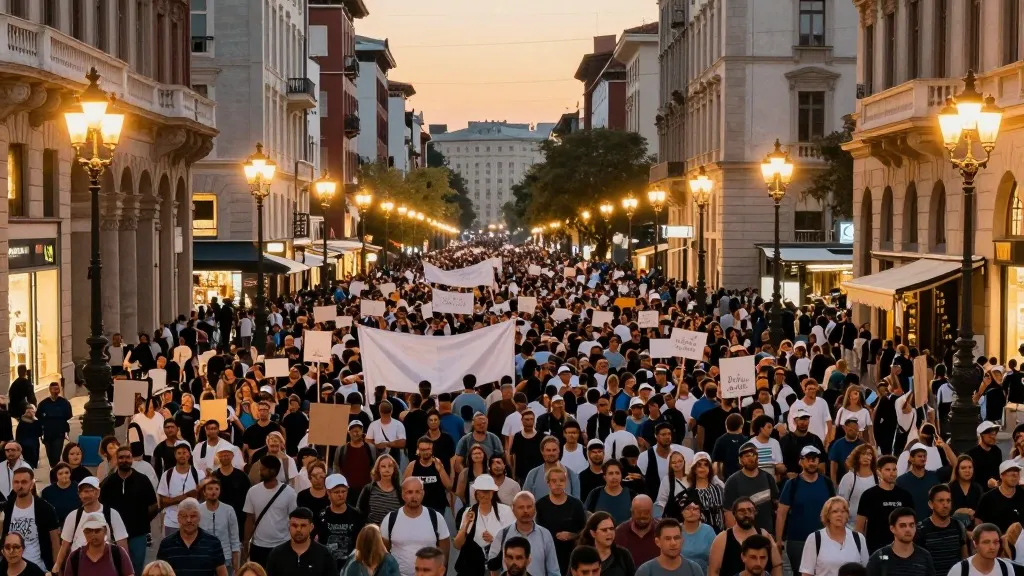
Tensions surrounding the future of Spain's social safety net reached a visible peak in Madrid this past Saturday. Approximately 25,000 people took to the streets to voice their concerns about the state pension scheme. The gathering occurred just weeks before the upcoming general election, setting a charged political tone for the final stretch of the campaign. This public display of support for the pension system aligns with a broader wave of demonstrations across Europe, where citizens are protesting issues ranging from the cost of living to school conditions and alleged corruption.
The protest route traced a significant path through the heart of the capital. Marchers originated from Atocha train station, drawing participants from various regions of the country who traveled specifically for the event. The crowd moved along the Gran Via, a street known for being one of the busiest and most iconic in Madrid. Banners held by the demonstrators clearly stated their primary demand, reading "protect and guarantee our pensions." The visual unity of the march underscored the collective anxiety regarding the long-term viability of the system.
The driving force behind the rally is a specific fear among citizens that the state pension system could suffer significant structural changes depending on the election outcome. Participants are united in their desire to keep pension payments indexed to inflation. Furthermore, the crowd called for the elimination of the gender pension gap, a persistent disparity that affects many female retirees. The message was clear: the current model of protection must be preserved against potential political shifts.
Political figures have already begun to frame the issue in public discourse. Emilio Delgado, the deputy spokesperson for the left-wing party Mas Madrid in the Assembly of Madrid, expressed his solidarity with the marchers on the social media platform X. He argued that "no pension should be below the minimum wage" and emphasized that "a lifetime of work deserves a dignified retirement." Such statements reflect the broader political narrative that retirement income must remain a basic right rather than a variable subject to fiscal tightening.
The pressure on the pension system is not merely political but also demographic and economic. The scheme faces strain from multiple simultaneous factors. These include an ageing population, a persistently low birth rate, and stagnant wages. Additionally, the ratio of workers to pensioners is falling, which reduces the base of contributors supporting the payouts. As a result of these dynamics, the system has become increasingly dependent on direct state funding to remain solvent.
The financial scale of the issue is substantial. Spain's monthly pension bill reached a record high this year, totaling almost 14.5 billion euros, which is equivalent to $16.2 billion. As the number of retirees grows and the value of individual monthly payments rises, the government must allocate more resources to cover these obligations. This financial reality makes the pension system a central point of contention in the current political landscape.
The two main political camps have clashed over how to handle this fiscal burden. Prime Minister Pedro Sanchez has accused the right-wing Popular Party, or PP, of planning to weaken inflation-linked pension increases if it secures victory in the election. Sanchez has pledged to protect the pensions if he remains in office, arguing that the current system is financially affordable. His position frames the issue as a choice between stability and reduction.
In response to these accusations, Alberto Nunez Feijoo, the leader of the PP, addressed the matter on Monday. He stated that his party would continue to raise pensions in line with inflation if they win the vote. His comment serves as a direct rebuttal to the Prime Minister's claims, suggesting that the right also intends to maintain the value of retirement income. With the election imminent, both sides are now locked in a debate over the specifics of pension policy, ensuring that the issue will remain at the forefront of the campaign until the votes are counted.
More Politics · World news · Report a business · Got a Story?