NASA Opens Applications for 25th Astronaut Class to Expand Moon Program
The agency seeks candidates by December 3 to support lunar surface operations and infrastructure development starting in 2028.
By Fatou Kim ·
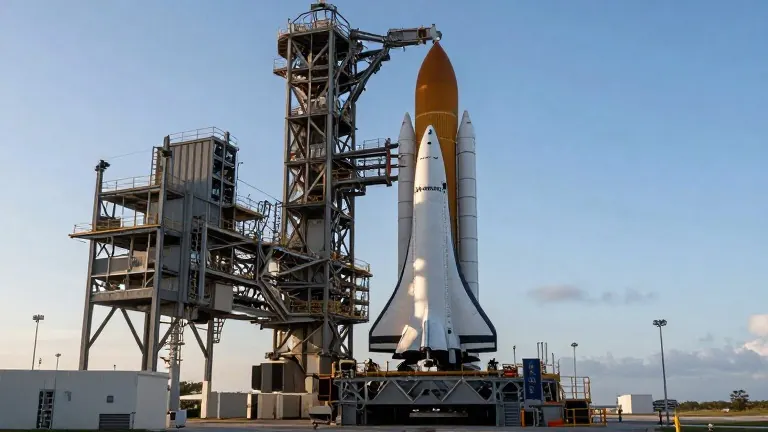
NASA has opened the application window for its 25th astronaut class, seeking new candidates to support the agency's expanding lunar program. Officials announced the opening on Saturday during an air show at the Kennedy Space Center in Cape Canaveral, Florida. The agency aims to use this new cohort to help establish a permanent presence on the moon.
The current astronaut corps consists of only 32 active members. This number is insufficient for the agency's goals of expanding beyond low-Earth orbit. The previous recruitment cycle occurred two years ago, drawing more than 8,000 applicants. In September 2025, NASA selected ten individuals from that pool.
Artemis III commander Randy Bresnik stated that the agency has more work than it has personnel. He emphasized the urgency of the recruitment effort. Candidates have until December 3 to submit their applications. NASA plans to finalize the selection process by late 2027. New trainees are expected to begin their mandatory two-year training program by early 2028.
Early 2028 is the same year NASA intends to return humans to the lunar surface for the first time since the early 1970s. Bresnik urged potential applicants not to delay their submissions. He noted that people will be on the moon by the time these candidates complete their training.
Requirements for the new class include U.S. citizenship, a college degree, and professional work experience. Candidates must also possess patience, as the path to spaceflight is long. Frank Rubio, a member of the Artemis III crew and holder of the U.S. record for 371 consecutive days in space, advised that the actual time spent on the moon will be a small fraction of a candidate's career.
Rubio explained that most of an astronaut's work involves preparation rather than flight. The upcoming mission schedule includes Artemis II, which completed a lunar flyby in April. Artemis III will launch next summer to practice docking with spacecraft built by SpaceX and Blue Origin. Artemis IV, scheduled for 2027, will attempt to land astronauts near the lunar south pole.
The long-term goal involves building a moon base with rovers, robots, structures, and power grids. This 25th class marks a continuation of a program that began with the Mercury Seven in 1959. The agency expects the new group to contribute to these infrastructure efforts as the lunar campaign progresses.