Musk Claims Suppliers Are Fast-Tracking Gear for Terafab Chip Plant
Tesla and SpaceX aim to begin volume chip production in Texas by 2028, though leaders acknowledge the schedule is ambitious.
By Fatou Kim ·
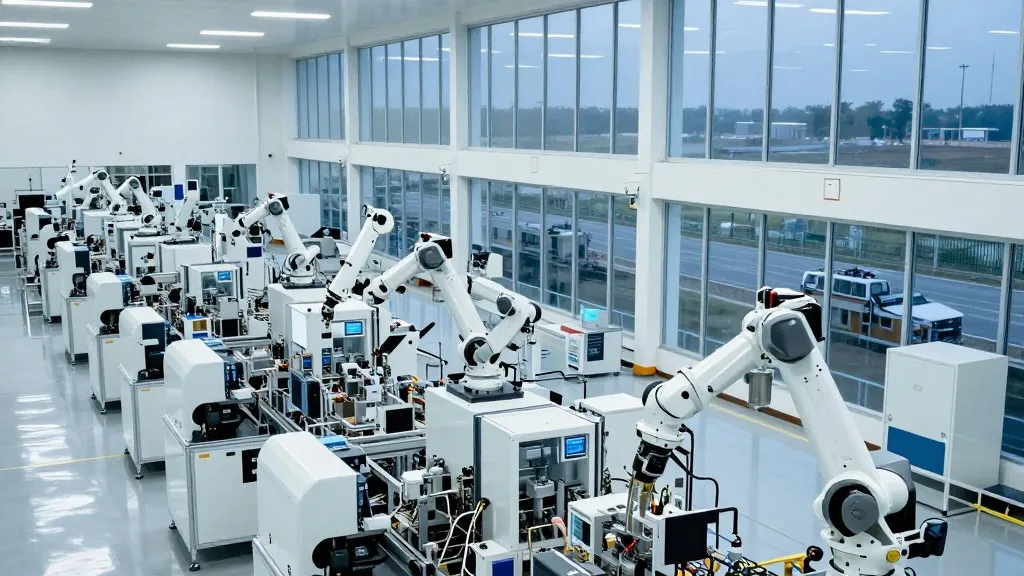
Elon Musk announced that key semiconductor equipment vendors are accelerating deliveries for the Terafab manufacturing facility, a joint venture between Tesla and SpaceX. This move supports the companies' aggressive timeline for one of the most ambitious chip fabrication projects in the region. The facility is designed to produce advanced processors for autonomous vehicles, humanoid robots, and artificial intelligence infrastructure.
During a live broadcast of the SpaceX third quarter 2026 earnings call on X, Musk provided specific targets for the project's rollout. He stated that volume production at the primary site in Gibbons Creek, Texas, is targeted for the third or fourth quarter of 2028. While the goal is explicit, Musk described the timeline as highly aspirational and noted that it carries significant uncertainty, referring to it as having big error bars. The first experimental test chip is expected to come from the research facility in Austin, Texas, around the second quarter of 2027.
The project relies on a complex network of international and domestic suppliers to meet these deadlines. ASML, the sole commercial provider of extreme ultraviolet lithography systems, is considered the most critical partner. These machines are essential for leading edge chip production and cost approximately $400 million each. Unofficial sources previously suggested the first EUV tool was slated for delivery in mid 2027. Musk indicated that this supplier, along with others, is expediting shipments to align with the accelerated schedule.
Other major contributors to the supply chain include Applied Materials, Lam Research, KLA Corporation, and Tokyo Electron. These firms will provide front end processing, metrology, and process control machinery. Additionally, Tesla and SpaceX are in negotiations with roughly ten South Korean equipment makers. These partners include Hanmi Semiconductor and HPSP, which specialize in advanced packaging and high pressure hydrogen annealing, respectively. The facility will also use Intel's 14A manufacturing node technology, a partnership that began in April 2026 when Intel joined the venture to help co develop silicon fabrication processes.
The commercial potential of the facility is substantial. Musk stated that once fully operational, the value of Terafab's advanced chip output would be comparable to the GDP of a top 20 country from a single physical building. For perspective, Switzerland, currently ranked 20th globally, has a GDP of approximately $1.14 trillion. The facility is planned as a vertically integrated plant capable of manufacturing one terawatt of AI computing power per year. It will handle logic, memory, and advanced packaging internally, reducing reliance on external foundries like TSMC.
In the same broadcast, Musk outlined near term goals for his AI companies, separate from the Terafab timeline. He expects these entities to activate 2.5 to 3 gigawatts of computing capacity by the end of 2026. He expressed high confidence in adding an incremental 10 gigawatts in 2027. To achieve a total of 13 gigawatts of AI compute by the end of 2027, SpaceX and xAI are aggressively procuring next generation NVIDIA hardware. A specific target includes getting a 440,000 GPU Nvidia Vera Rubin training cluster online by the end of the second quarter of 2027.
The scale of Terafab is difficult to contextualize against current industry standards. Gartner estimates that total global AI optimized data center capacity is roughly 44 gigawatts as of late 2026. This figure represents only 4.4% of Terafab's planned annual output. While global AI computing capacity has grown at a rate of 3.3x to 3.4x per year since 2022, according to EpochAI, the gap between current global totals and the single facility target remains vast.
The project aims to mitigate future shortfalls in cutting edge AI processors. The chips produced at Terafab will supply Musk's xAI clusters, self driving vehicles, Optimus humanoid robots, and SpaceX's orbital AI data center. The facility is also intended to serve the broader AI industry. Despite the detailed roadmap and supplier commitments, experts have questioned the feasibility of the one terawatt ambition. The expedited supply efforts represent a significant shift in the semiconductor industry's logistics to support a single private megaproject in Texas.
More Business · Consumer Alerts · Report a business · Got a Story?