Pahlavi to Receive Freedom Prize in Frankfurt as Opposition Gains Traction
The award, given to a nation for the first time, marks a shift in European diplomatic strategy toward Tehran following the January crackdown.
By Noor Phillips ·
Crown Prince Reza Pahlavi will accept the Friedrich Naumann Foundation’s 2026 Freedom Prize in Frankfurt on Saturday. The German foundation, affiliated with the Free Democratic Party, awarded the honor to the Iranian people rather than a single individual. This marks the first time in the prize’s two-decade history that an entire nation has been recognized for its struggle against the Islamic Republic.
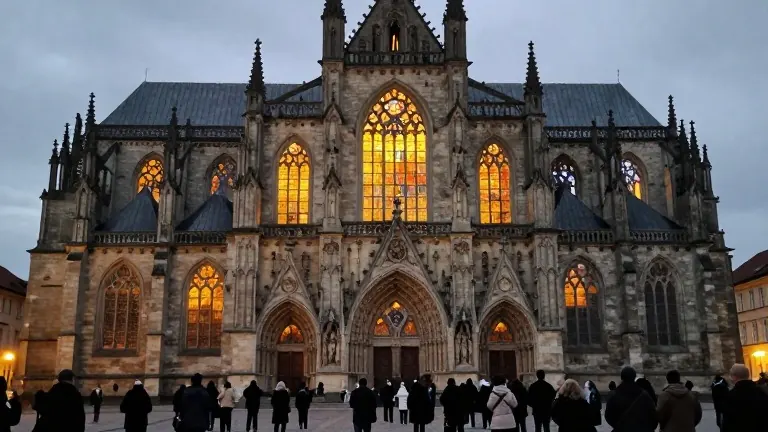
Pahlavi, the exiled son of Iran’s last shah, has been appointed to hold the prize in trust. He will retain the award until a freely elected Iranian government can assume custody. The ceremony takes place at St. Paul’s Church in Frankfurt, a venue linked to Germany’s democratic heritage. The event follows a week of diplomatic meetings in Brussels and Germany.
The foundation’s decision was driven by the violence in January, when security forces killed thousands of demonstrators. Prof. Ludwig Theodor Heuss, a member of the foundation’s board of trustees, stated that the January events were decisive. He cited estimates of more than 5,000 deaths, though opposition groups suggest the toll could reach 50,000. The regime imposed a sweeping internet blackout during the crackdown, complicating efforts to verify the exact number of casualties.
Pahlavi concluded a series of meetings with European leaders aimed at shifting policy toward Tehran. He met David McAllister, chairman of the European Parliament’s Committee on Foreign Affairs, in Brussels. Pahlavi advocated for additional sanctions and greater cooperation with technology firms to help Iranians bypass internet restrictions. He argued that European governments have treated the Islamic Republic as a conventional state, relying on economic incentives that do not apply to a revolutionary movement.
In written responses, Pahlavi said the award and his meetings indicate a growing consensus among European politicians that the current regime must change. He described the shift in the European mindset as a move away from projecting rational cost-benefit metrics onto what he termed religious fanatics. Heuss, while independent of the German government, agreed that Europe should not strengthen the regime through diplomacy that fails to save lives.
The choice of Pahlavi as the trustee has drawn some criticism from within the opposition. The movement includes monarchists, republicans, and various ethnic groups. Heuss clarified that the foundation did not endorse Pahlavi as Iran’s future leader or the restoration of the monarchy. He emphasized that the prize belongs to the people and will be transferred to democratically chosen representatives. The foundation valued Pahlavi’s stated commitments to democracy, the rule of law, and peace with neighboring states.
The protests began in late December 2025 over economic conditions before expanding into a nationwide demand for an end to clerical rule. Demonstrations spread across cities, accompanied by strikes and open support for Pahlavi. The authorities responded with a crackdown that continued through October, when more than 70 executions were carried out. The foundation intends to keep the struggle visible in Europe, where diplomacy with Tehran has often been prioritized over human rights concerns.
Pahlavi has maintained a covenant with the Iranian nation for over four decades. He described the responsibility of holding the prize as heavy but not new. The award serves as a platform to reassure Iranians of his continued commitment to leading the struggle for freedom and transitioning away from the current government. The foundation views the prize as a recognition of the courage of women, students, and workers who took to the streets despite the risks.