Three envoys arrive in Tehran as US midterm election looms
Pakistan, Saudi Arabia, and Turkey sent top military and intelligence leaders to Iran on Monday to mediate before November 3, with no formal breakthrough announced.
By Noor Phillips ·
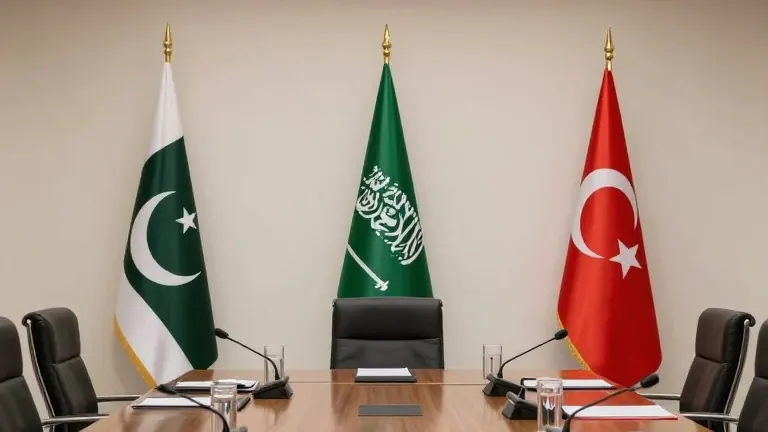
Tehran, Iran, witnessed a coordinated diplomatic arrival on Monday as three senior foreign officials met with President Masoud Pezeshkian and other senior leaders. The visitors included Pakistan's army chief Asim Munir, Saudi Defense Minister Khalid bin Salman, and Turkish intelligence chief Ibrahim Kalin. All three represent the Mecca defense pact, a military alliance established this summer among Islamabad, Riyadh, and Ankara.
The timing of the visits coincides with growing concerns that the United States and Israel may launch new attacks on Iran following the US midterm election scheduled for November 3. Saudi Arabia stated the trip aims to open negotiating channels and prevent a return to military escalation. While specific agenda details remain limited, a senior Pakistani official told Reuters that discussions covered building a regional non-aggression network. Other topics included US-Iran talks, Houthi rebel attacks on Saudi Arabia, the Strait of Hormuz, and the US naval blockade.
Munir presented a proposed solution to the conflict that offers concessions to both Washington and Tehran. Under this plan, the three Mecca states and Qatar would act as mediators. A source told Reuters that US President Donald Trump previously gave Munir approval to pursue this diplomatic track. Iranian officials described the atmosphere during the talks as very positive, though no official breakthroughs were announced.
Mohsen Rezaei, head of Iran's Supreme National Security Council, told state television that very good discussions took place. He expressed the view that a new atmosphere is emerging in the region. Rezaei argued that regional security should be built by West Asian countries themselves without outside intervention. The next day, Rezaei met with Supreme Leader Mojtaba Khamenei. Iranian state media reported that Khamenei called for protecting Iran's interests and maintaining Tehran's conditions for ending the war and the current state of neither war nor peace.
The unified front from the three nations serves as a display of strength for the new alliance. Saudi Arabia has grown wary of Houthi attacks on its infrastructure. Under the Mecca agreement, an attack on one member is considered an attack on all. This visit occurred on the same day Egypt's parliament agreed to provide military help to Riyadh to help defend itself against potential threats from the US and Israel.
Babak Dorbeiki, a London-based political analyst, told DW that the simultaneous presence of the three representatives sent a message that these countries are acting as a bloc. He noted that Saudi Arabia can now theoretically count on Pakistan's nuclear capability and Turkey's conventional military strength. However, Dorbeiki argued the pact is primarily designed for deterrence rather than offensive war, suggesting that having a defense pact does not mean the members want to fight Iran.
Saudi Arabia faces a dilemma between Houthi attacks damaging its economy and the risks of a wider war threatening its development projects. Dorbeiki said Saudi Arabia prefers a diplomatic solution because both the current situation and war carry serious costs. Pakistan has spent months mediating between Washington and Tehran. A direct conflict would distract Islamabad from security concerns involving India.
Turkey, a NATO member, sent its intelligence chief rather than its foreign or defense minister, suggesting a cautious approach. Dorbeiki said direct military support for Iran against the United States is highly improbable. The message from the bloc could work in two directions: it provides mediation, but continued escalation could alter that position.
Ali Asghar Shafieian, media advisor to President Pezeshkian, rejected the idea that the Mecca pact representatives presented Tehran with an ultimatum. He told DW that the countries may have wanted to demonstrate their growing coordination while showing Iran remains part of regional diplomacy. Shafieian noted that Iran, like the US and Israel, is preparing for the possibility of further conflict while maintaining negotiations. He stated that an agreement remains possible if Iran's political standing and national dignity are respected.