No Majority Emerges as Israel's Election Leaves Path to Power Unclear
Exit polls show neither Likud nor Yashar secured enough seats for a government, triggering a complex coalition-building process.
By Olivia Miller ·

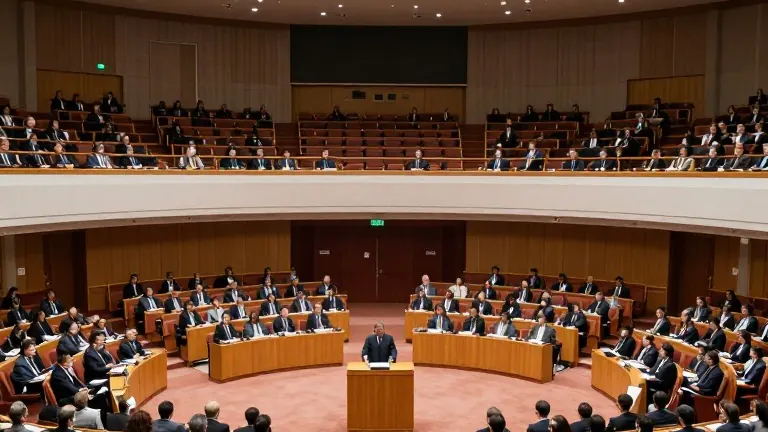
As dawn broke over Israel on Wednesday, the counting of ballots for the nation's latest parliamentary election was still underway, with early results pointing to a fractured mandate. Exit polls released by major television stations immediately after polls closed on Tuesday night indicated that neither Prime Minister Benjamin Netanyahu’s bloc nor the camp of his main rival, former military chief Gadi Eisenkot, had secured the 61 seats required for a majority in the Knesset. This outcome sets the stage for weeks of negotiations among various parties to assemble a governing coalition.
Official data from the Central Elections Committee, released Wednesday morning, showed that 60% of the vote had been counted. In that portion of the tally, Netanyahu’s Likud party held 21.4% of the vote, while Eisenkot’s Yashar party trailed with 16.2%. The data did not yet specify the exact number of seats each party would claim, leaving the final parliamentary arithmetic in flux. Israel’s electoral system requires parties to form alliances to achieve a governing majority, a process that has never been won by a single party.
The political landscape is further complicated by a strong showing from Arab-led parties. These groups could serve as kingmakers if the two main blocs remain tied and unable to form a government independently. Netanyahu addressed his supporters in Jerusalem past 3 a.m., claiming Likud would be the largest party in the next parliament. He pledged to complete Israel’s military objectives against Iran and warned that no future government should rely on Arab parties.
In Tel Aviv, Eisenkot took a different tone, focusing on national unity in his early morning speech. He pledged to form a government and promised a new era of hope for Israelis. He told cheering supporters that the people had decided in favor of change. The inconclusive results reflect a country that remains deeply divided over leadership and the aftermath of the October 7, 2023, attack and subsequent regional conflicts.
Attention now turns to President Isaac Herzog, whose role is largely ceremonial until this moment. He must choose whom to task with forming a government, typically the leader of the party with the most votes. While Likud currently leads with half the votes counted, Herzog is not required to select Netanyahu. Some argue that a different choice might ease the coalition-building process given the polarization of Netanyahu’s government.
Logistical challenges persisted during the count, as hundreds of thousands of military ballots remained unprocessed. The military reported a 79.9% turnout among its personnel, an increase of more than six percentage points from the previous election. Some polling stations were established in combat zones to facilitate voting.
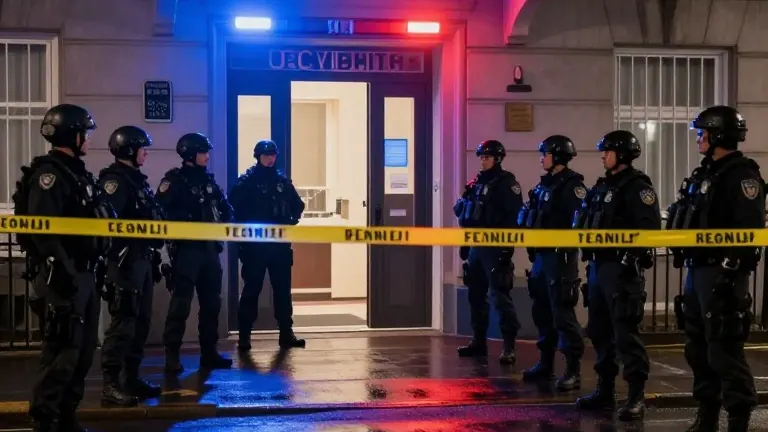
In Washington, President Donald Trump disputed the narrative of a potential Netanyahu defeat. Speaking at Joint Base Andrews in Maryland, he said he heard that Netanyahu did pretty well. Trump noted it was early and that he had not yet spoken with the Israeli prime minister. Meanwhile, in Belgrade, Serbian police treated an incident where a minor attacked a guard outside the Israeli Embassy as a terrorist attack, raising the national threat level.