Yemen's Taiz Faces Economic Collapse as Water Prices Spike
Supply chain disruptions in Taiz have driven essential costs to record highs, forcing residents to ration basic needs while the city's economy shrinks.
By Fatou Kim ·
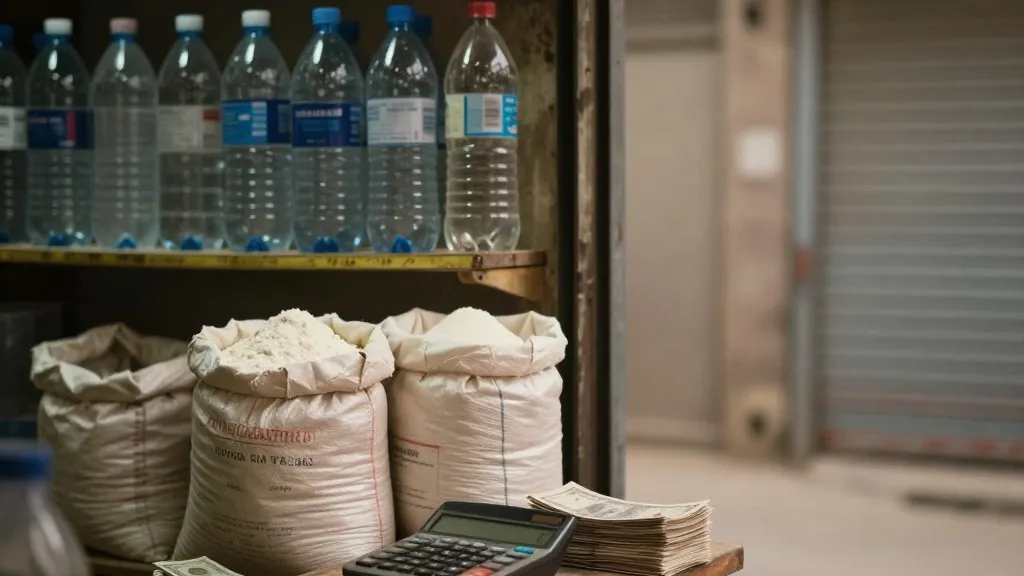
The cost of survival in Yemen's third-largest city is rising sharply as a tightening blockade squeezes local markets.
Aid agencies report that the water crisis in Taiz has moved from a chronic issue to an acute economic shock. For over a decade, residents have struggled to find reliable drinking water, but the current siege by Iran-backed Houthi forces has accelerated the decline. With more than one million people in the city, the demand for essential resources now far exceeds the shrinking supply.
The financial impact on households is immediate and severe. Bottled water prices have jumped by as much as 75% in just a few weeks. Families are stretching their consumption to the limit. One resident, Hadil al-Shahid, noted that her household, which includes two young children, used to burn through 10 liters of water daily. That same volume now lasts four days. To manage the budget, many families have cut out daily staples like coffee and tea, and some are now purchasing water on credit.
The squeeze on liquidity extends beyond water. Fuel scarcity is disrupting logistics, causing food prices to climb and making it difficult to keep hospitals and sanitation services operational. Grocery items such as flour and rice are now roughly 50% more expensive than they were in the summer. Cooking gas prices have more than quadrupled, forcing many to rely on wood, charcoal, or even cardboard for heat. This scarcity creates a cycle of rising costs that threatens public health and economic stability.
The broader geopolitical context is driving these market shifts. Since August, the conflict in Yemen has become a wider front in the regional war. Houthi forces captured the port city of Mokha last month, a strategic move to control Red Sea shipping. This advance has cut off access to wells and key roads around Taiz. Truckers who still navigate the dangerous routes have tripled their rates, further inflating the cost of imported goods and services.
Local businesses are feeling the strain. Al-Shahid, who owns a hair salon, has had to close her shop as customers prioritize spending on food and water. Her children now subsist on a diet of rice, bread, and cheese. Another displaced resident, Ahmed Abdel Gaber, relies on donations for food because his income from hauling construction materials has become unstable. The United Nations estimates that Taiz province has absorbed 124,000 displaced people since August, straining local resources further.
Analysts suggest that controlling Taiz is a strategic priority for the Houthis if they aim to move south. However, any attempt to take the city is expected to be a costly and prolonged battle. Currently, the rebels control about 80% of the surrounding countryside, according to anonymous officials, though this figure has not been independently verified. As the siege continues, the economic pressure on Taiz shows no sign of easing.
More Business · World news · Consumer Alerts · Report a business · Got a Story?