AI model outperforms traditional forecasts in hurricane path prediction
Google DeepMind's system correctly identified the landfall location for Hurricane Isaias, prompting a shift in how the National Hurricane Center validates new tools.
By Noor Phillips ·
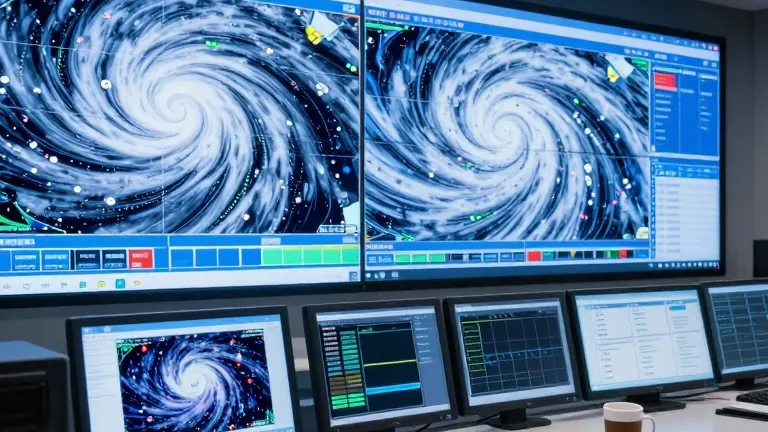
Hurricane forecasters are grappling with a new reality as artificial intelligence models begin to outpace traditional physics-based systems in predicting storm paths. During the formation of the first hurricane of the current Atlantic season, an AI model identified the correct trajectory before conventional algorithms did. This shift marks a rapid change in a field that typically sees new tools take years to gain credibility.
In early October, Hurricane Isaias made landfall near Destin, Florida, as a Category 2 storm. Standard forecasting models initially indicated the system would move further west toward southeastern Louisiana. Google DeepMind's AI model, however, predicted the storm would strike the western Florida Panhandle from the start. Meteorologist Michael Lowry, who has advised the Federal Emergency Management Agency and the National Hurricane Center, called the DeepMind system the current gold standard. He stated that the model has been the best-performing computer model they have ever seen.
The National Hurricane Center began using the Google DeepMind model in its official forecasts last year. Brian McNoldy, a hurricane researcher at the University of Miami, noted that by the end of the 2025 season, the tool was already among the top performers for path and strength predictions. He described the rapid adoption as unusual, noting that new models rarely become the best immediately after introduction.
Traditional models rely on real-time atmospheric data such as temperature, humidity, and pressure, using complex equations to predict storm behavior. AI models operate differently, analyzing thousands of past storms to identify patterns. Lowry explained that these systems do not rely on the governing equations of atmospheric physics. Instead, they use neural networks developed largely by software engineers rather than meteorologists. This approach creates a black box effect where forecasters often do not know why a prediction is right or wrong.
Despite the accuracy of the DeepMind model, it is not the only successful AI tool. The European Centre for Medium-Range Weather Forecasts also has a highly accurate AI model. The National Hurricane Center uses a blend of both AI and traditional models to create its official forecasts. Director Michael Brennan said the center takes a consensus approach because every storm presents different forecast challenges. Human forecasters interpret the model outputs to provide continuity and clear guidance to the public.
The DeepMind model still has areas for improvement. While it accurately tracked the path of Isaias, it did not perform as well as the center's blended forecast in determining the storm's intensity. Brennan's team provides regular feedback to Google DeepMind to help refine the system. Google did not respond to questions regarding the specific improvements being made.
The speed of AI development is changing the pace of forecasting. Traditional models are updated annually, while AI systems can be updated in weeks or months. Lowry said the advancements in skill seen over the past year would have taken a decade or more using traditional methods. He noted that while the technology is improving rapidly, he does not see AI replacing human forecasters. He described the technology as a boon for the business rather than an existential crisis.