Bereaved Families Seek National Unity Framework
Relatives of those lost in the recent conflict are asking the incoming government to prioritize social cohesion within its first 100 days in office.
By Olivia Miller ·
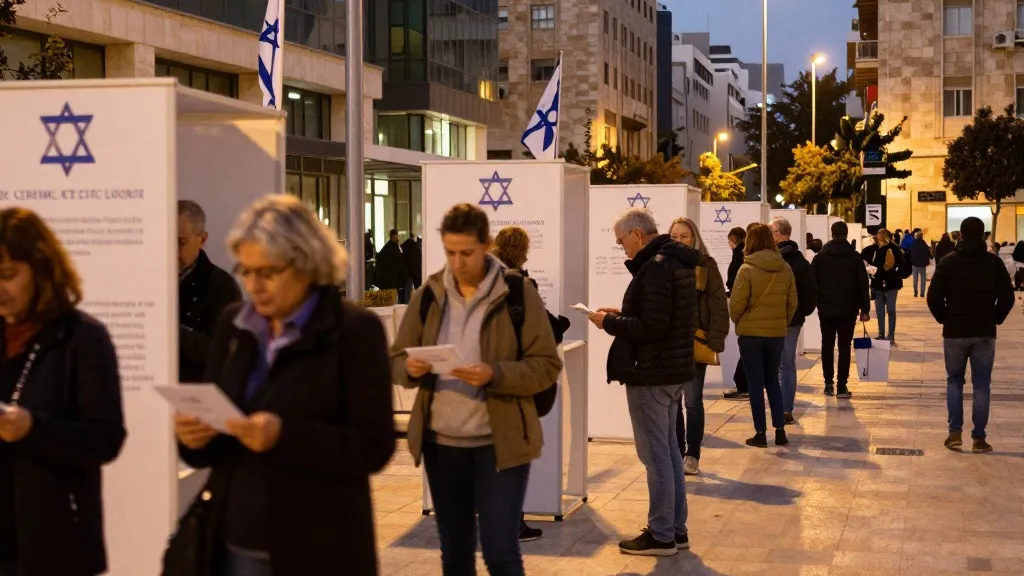
Within 100 days of taking office, the next Israeli government would be asked to establish a formal framework for social cohesion, according to a request from a group of bereaved families, captivity survivors, and individuals wounded in the Israel-Gaza War. This initiative, known as Hamechane, which translates to 'the denominator,' seeks to address what its members view as a critical internal division. The group's formation reflects a collective desire to move beyond the immediate grief of the conflict and address the underlying societal fractures that members believe contributed to the tragedy of October 7, 2023.
The push for a national commitment to unity comes from individuals directly affected by the violence. Moshe Shapiro, whose son Aner died on October 7 while protecting others at a music festival, is a founding member. He is joined by Hoda Daxa, whose husband, an armored brigade commander, was killed in northern Gaza in October 2024, and Shai Zohar, the uncle of a soldier whose body was returned from Gaza in November 2025. The group's members argue that the nation's greatest existential threat is now internal polarization and that the divisions present before October 7 played a role in enabling the catastrophe to unfold.
Shapiro points to a historical precedent for fostering a shared national identity, referencing a public education campaign from the 1960s that successfully instilled a collective responsibility for protecting wildflowers. He suggests a similar approach could be used to embed a culture of respect for differing opinions. Zohar, who called internal division an existential threat, stated, 'Unity is an operating system, an approach,' and warned that Israel cannot afford to regress given the immense price already paid. Daxa, who is Druze, added that unity must extend beyond the Jewish community, noting that many people from other backgrounds are already integrated into society and wish to contribute.
The conversation has also highlighted specific points of contention within Israeli society, such as the 2018 Nation-State Law. The legislation, which defines Hebrew as the state language and reserves national self-determination for the Jewish people, has been criticized by some in the Druze community for excluding them, despite their military service to the state. The High Court upheld the law in 2021, interpreting it as compatible with equality protections, but the issue remains a source of tension. Daxa recounted a personal experience of feeling unwelcome on a train while speaking Arabic with her children, stating, 'Hatred doesn't distinguish.'
Shapiro described a yearlong effort to build a shared vision among a diverse cross-section of Israelis, including religious and secular Jews, haredim, Druze, and political figures from both the right and left. He asserted, 'This is the face of Israeli society,' emphasizing that participants did not need to conceal their personal views. This approach mirrors a historical moment before the Six Day War in June 1967, when his grandfather, a signatory of the Declaration of Independence, urged the prime minister to include opposition parties in the government to present a united front.
While the group advocates for a government-led initiative to foster connection in schools, workplaces, and communities, it has not defined the specific structure of the proposed body, leaving that decision to elected officials and experts. The members of Hamechane maintain that their goal is not to demand personal sacrifice, but rather to encourage listening, making space for others, and recognizing that disagreement does not erase mutual obligations. They believe that acknowledging polarization as a national danger would be a significant first step toward healing.
More Politics · World news · Report a business · Got a Story?