Israelis vote in record numbers
Exit polls show a split mandate, leaving weeks of coalition talks ahead.
By Fatou Kim ·
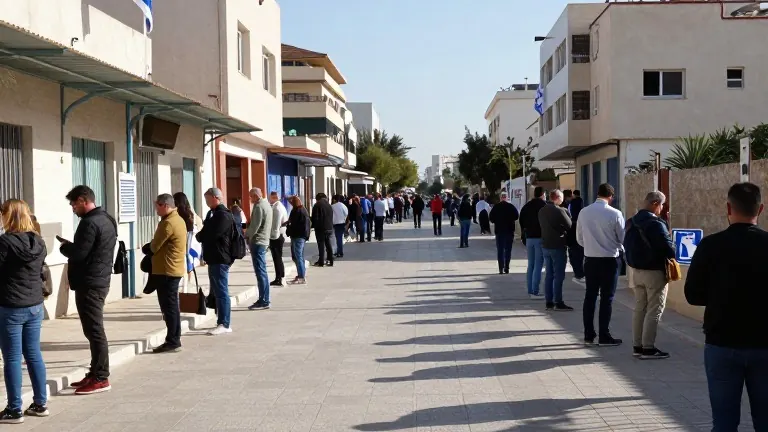
Voters in Israel cast ballots on Wednesday in what was the most contested election in the country’s recent history. The turnout reached 77.7 percent of eligible citizens, marking the highest level of participation since 1999. Prime Minister Benjamin Netanyahu emerged from the polls claiming his bloc would remain the largest force in the government, though he stopped short of declaring victory.
With half of the votes counted, Netanyahu’s Likud party held 20.6 percent of the total. His main challenger, former military chief Gadi Eisenkot, led his Yashar party at 16.8 percent. The Central Elections Committee has not yet translated these percentages into specific seat counts in the 120-seat Knesset. Final numbers, including hundreds of thousands of absentee ballots, are expected within days.
Exit polls from major television stations suggested a tight race. Netanyahu’s governing coalition appeared to have shrunk, but Likud remained the strongest single party. Eisenkot’s bloc and Netanyahu’s bloc each projected to win approximately 51 seats. Arab-led parties were estimated to secure around 18 seats, a historic showing that complicates the path to a majority.
Netanyahu dismissed the idea of allying with Arab parties, calling such a partnership treasonous. He stated, “We must establish a strong, right-wing, nationalist government,” and warned against relying on anti-Zionist Arab parties. Eisenkot left the door open to cooperation with Arab factions under specific conditions, including their recognition of Israel as a Jewish state and Hamas as an extremist group.
The United Arab List, the only Arab party to have joined a governing coalition previously, celebrated a strong result. Party leader Mansour Abbas declared, “We are here, we are not on the sidelines.” This performance gives the party leverage in the coming negotiations, though Netanyahu has refused to work with them.
Far-right National Security Minister Itamar Ben-Gvir suffered a notable setback. Many voters viewed him as a symbol of the government’s hardline approach, particularly his treatment of Palestinian detainees and his rhetoric regarding Gaza. His party’s performance reflected a shift in public sentiment away from the most extreme factions of the ruling coalition.
President Isaac Herzog will now determine which party leader is asked to form a government. He is not required to choose the party with the most seats. If no majority coalition can be formed, Israel may face a fifth election in six years, a cycle that occurred between 2019 and 2022.
The election was shaped by three years of war following the October 7, 2023, attack by Hamas. Supporters of Netanyahu credit him with leading the country through a war of redemption. Critics argue he prolonged the conflict for political reasons and weakened democratic institutions. The result leaves the country in a state of political uncertainty as leaders prepare for weeks of bargaining.