Midterm Pattern Holds: Both Parties Tried to Beat It, Democrats Won
Republicans redrew maps to protect their majority, and Democrats nationalized the vote on costs and the Iran war, resulting in a sweeping Democratic shift in Congress.
By Fatou Kim ·
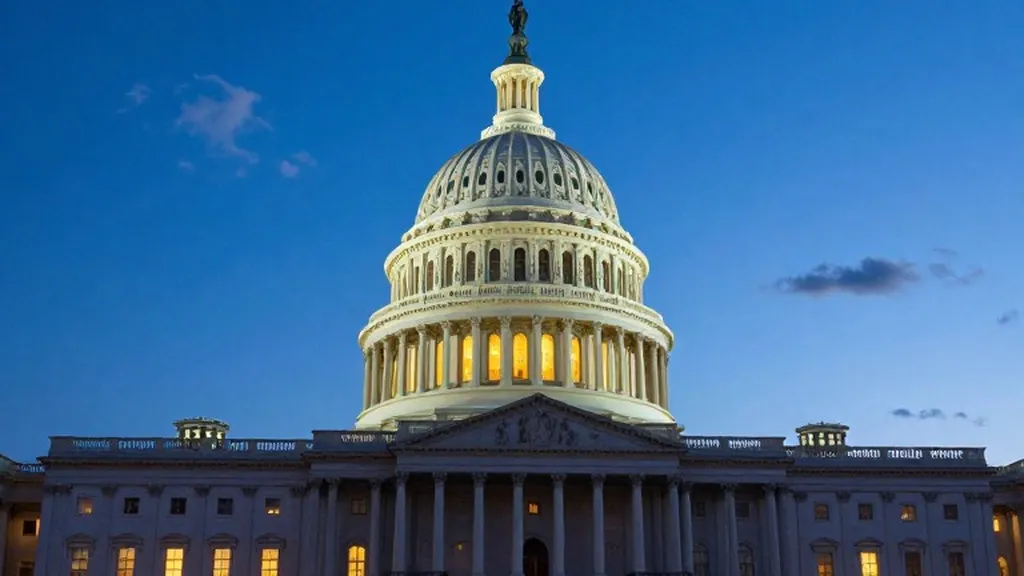
In the history of American politics, a consistent pattern has emerged: the president’s party almost always loses seats in midterm elections. This historical tendency, often driven by voter dissatisfaction with the incumbent administration, sets the stage for every midterm cycle. In 2026, both parties entered the election aware of this trend, deploying specific strategies to either mitigate the expected losses or amplify the expected gains. The outcome, as results continued to come in early Wednesday, was a decisive shift in power that defied the modest expectations of the past.
The Republican Party, led by President Donald Trump, sought to engineer a map that would cushion the blow of a typical midterm downturn. At the urging of the president, Republicans in eight states redrew the boundaries of dozens of congressional districts over the past year. The goal was to create a durable edge that could help them hold onto a slim House majority and potentially retain control of the Senate. The plan was to net as many as four more seats in Florida, two in Ohio, and one each in Alabama, Louisiana, North Carolina, and Tennessee. These new districts were designed to capture the momentum of Trump’s 2024 victory, with estimates suggesting that in all but one of the revamped districts, Trump would have carried over 54 percent of the vote had they been in place two years prior.
However, the Democratic Party responded with its own counter-strategy, focusing on national issues and retaliatory redistricting where possible. Democrats aimed to turn the election into a referendum on the cost of living and the war in Iran, issues that polled as top concerns among voters. In California, a retaliatory Democratic redistricting flipped previously Republican-held seats, offsetting some of the gains Republicans had hoped for in the South. The Democratic surge was fueled by voter dissatisfaction with Trump, the economy, and the ongoing conflict with Iran. Former Attorney General Eric Holder, chair of the National Democratic Redistricting Committee, stated that the Republican plan was systematically dismantled, allowing voters to elect a new Democratic majority.
The results revealed that the Republican redistricting plan fell flat in key states. In Texas, Republicans reconfigured three heavily Latino districts in the Rio Grande Valley to try to unseat Democratic incumbents, but both Henry Cuellar and Vicente Gonzalez won reelection. Instead, Democrats unseated Republican Rep. Monica De La Cruz, whose new district included a significant number of new voting-age residents. In Florida, Democratic Rep. Jared Moskowitz won reelection in a redrawn district, telling reporters that the money spent to beat him was lit on fire. In Alabama, Democratic Rep. Shomari Figures also won reelection, defying the Republican-led Legislature’s attempt to revert to a friendlier map.
Meanwhile, the Democratic strategy to frame the election around national discontent proved effective. About six in 10 voters disapproved of how Trump was handling the presidency. Roughly half of voters cited the cost of living and government corruption as crucial to their vote, surpassing other issues like immigration or the war in Iran. The war with Iran, which had sent fuel prices soaring, was a significant factor, with about six in 10 voters saying the U.S. Made the wrong decision in taking military action. This dissatisfaction translated into a nationwide romp for Democrats, who ousted Republicans from coast to coast, including in surprising places like South Carolina and Kansas, which had not elected a Democratic senator since 1932.
President Trump attempted to distance himself from the results, invoking the common presidential defense that he was not on the ballot. In a series of rallies leading up to the election, he urged supporters to pretend he was on the ballot, a phrase he used in at least 40 instances. On election night, he said, I don't like to consider it a defeat for me. I wasn't on the ballot. He blamed the candidates for not embodying his brand of energy, while also acknowledging that the war in Iran had an impact. Vice President JD Vance, who had been lukewarm in his defense of the conflict, publicly broke from the president’s stance, blaming the war for the GOP’s drubbing in a lengthy social media post.
The final tallies, confirmed the scale of the Democratic victory. In the U.S. House, Democrats won 227 seats, a net gain of 27, securing a strong majority. In the Senate, Democrats won 20 of the 35 seats up for election, flipping seven seats previously held by Republicans. This included victories in historically red states such as Texas, where Democrats had been shut out of every statewide race for more than three decades. The control of both chambers sets up a divided government, with Congress poised to reassert itself as a coequal branch ready to challenge the president and reverse course after two years of unified GOP control.
House Democratic Leader Hakeem Jeffries, who is expected to become the first Black speaker of the House, pledged to tackle high costs of living and confront the president’s final years in the White House. He outlined a 100-day agenda starting with efforts to lower the costs of gas and groceries, as well as bills to reverse cuts to healthcare programs. Republicans, led by outgoing House Speaker Mike Johnson who will not seek reelection, face a reckoning as they try to figure out what went wrong. The party’s failure to keep control of the Senate also ends an era of rapid judicial appointments that had reshaped the federal courts with conservative judges.