Young Latinos vote for Spanish-speaking leaders
Despite federal cuts to language access, a new cohort of elected officials is using Spanish to connect with voters in key states.
By Noor Phillips ·
The federal government has pulled back its use of Spanish in recent years, but local politics in several major cities is moving in the opposite direction. This shift is driven in part by a new generation of young voters who are casting ballots in large numbers despite not speaking the language fluently.
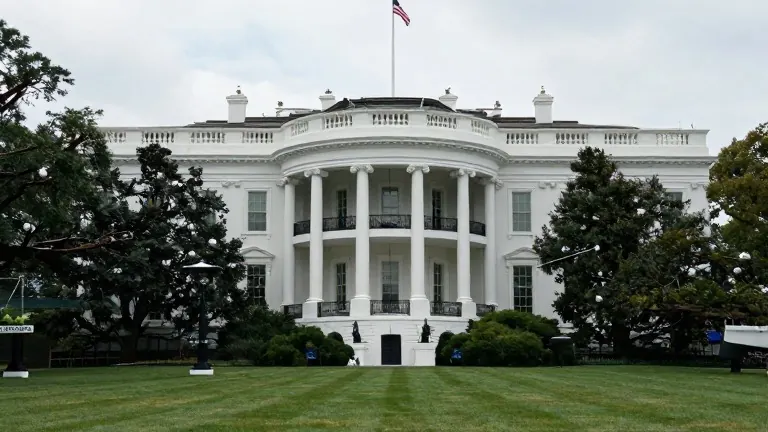
President Donald Trump removed the Spanish version of the White House website and closed official social media accounts in that language just hours after returning to office in January 2025. The administration followed this with a designation of English as the official language and the revocation of a federal guideline that required agencies to provide language assistance to people with limited English proficiency. While the new rule does not ban other languages, it gives federal agencies more discretion in how they communicate with the public.
In the lead-up to the recent elections, political observers noted the impact of a group often called "no sabo kids." These are young Americans of Latino heritage who grew up between two cultures but did not always inherit their parents' native tongue. The label, originally a joke about their difficulty conjugating the verb "saber," has become a point of pride for many. They have protested ICE raids, encouraged older relatives to vote, and turned out in high numbers to defend the interests of non-citizen family members.
Data from a CNN voter poll indicates that 74% of Latino voters between the ages of 18 and 29 supported Democratic candidates for the House of Representatives. This demographic is increasingly electing officials who use Spanish as a primary tool for outreach. In Texas, Representative Gina Hinojosa campaigns in both English and Spanish and organizes meetings specifically for Hispanic-speaking voters. In New York, Mayor Zohran Mamdani launched a WhatsApp channel and Instagram account in July 2026 called "El Chisme Oficial de NYC." These platforms distribute municipal information entirely in Spanish, covering topics like immigration, housing, and public utilities.
Sergio Otalora, a political analyst and communications team member for Florida Rising, noted that the push for English-only policies has weakened in states like Texas and New York. He pointed out that in New York, it is nearly impossible to erase the presence of the Spanish language. Otalora argued that the Trump administration's approach reflects a desire to remove Spanish from public life, a strategy that faces resistance in areas with large Latino populations.
Immigration attorney John de la Vega criticized the lack of interpreters in federal proceedings. He stated that excluding millions of people from understanding important legal instances is a serious error. De la Vega noted that the stigma associated with the language can cause children of immigrants to prefer not speaking it at home. He believes the Democratic Party has effectively used Spanish to make voters feel represented, a factor that he says weighed heavily in the recent election results.
Local governments are often more bilingual than the federal level. In Miami-Dade County, for example, official communications are provided in English, Spanish, and Haitian Creole. Similarly, in California cities like Los Angeles and San Diego, Spanish remains deeply rooted in daily life and government services. These local practices stand in contrast to federal forms and ICE interactions, where families often report having few language options.