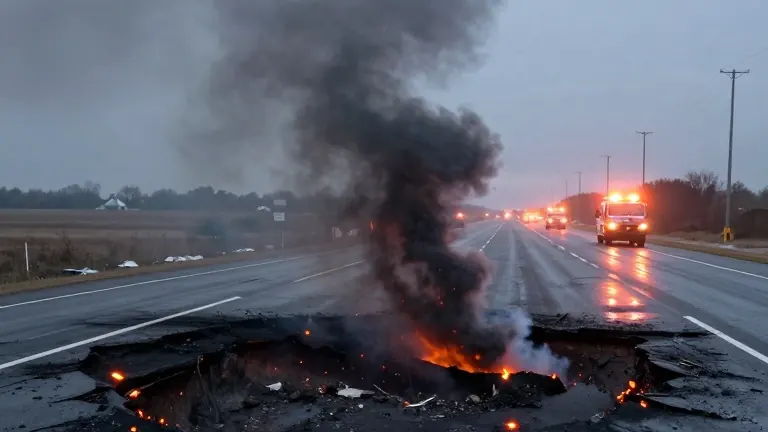
El Niño: Record rainfall hits Southwest as ocean temperatures spike
Over 20 trillion gallons of water fell on the region in two weeks, prompting evacuations and raising fears of catastrophic flooding.
By Noor Phillips ·
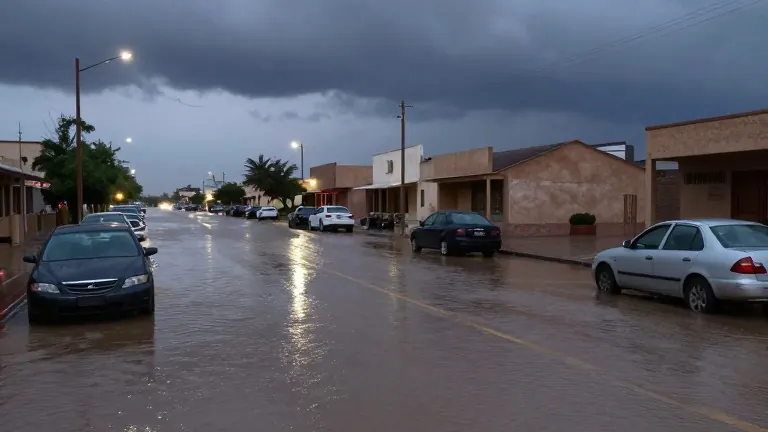
Residents in the Southwest face a new baseline for wet weather as extreme El Niño conditions intensify storms across the region. Flash floods forced evacuations in northern New Mexico and central Arizona on Sunday. In Colorado, a ski town prepared for its main river to reach catastrophic levels. These events followed a week of days-long flooding that battered southwestern states.
Meteorologists identify a particularly strong iteration of El Niño as a primary driver. This natural warming cycle heats Pacific Ocean waters, releasing moisture into the atmosphere that fuels passing storms. While such events occur irregularly every few years, experts describe the current one as exceptionally intense. Jeff Masters of Yale Climate Connections noted that while super El Niños have occurred before, the current event stands out for its extreme nature.
The phenomenon is not the sole cause of the severe storms, but it increases the likelihood and intensity of heavy rains across the Southern U.S. Ryan Maue, a former NOAA chief scientist, calculated that more than 20 trillion gallons of water have fallen on the Four Corners states and Nevada in the past two weeks. Daniel Swain of the University of California Agriculture and Natural Resources stated that the region is experiencing precipitation levels to a degree previously unseen for this time of year.
Human-caused climate change compounds the effects of El Niño by raising baseline ocean temperatures. Randy Cerveny of Arizona State University explained that because the oceans are warmer than they were 100 years ago, El Niño situations become even more intense. This combination adds extra moisture to the air and shifts atmospheric winds toward the Southwest, creating ideal conditions for storms.
The impact extends beyond the United States. Swain reported that Peru and Ecuador are also experiencing record-breaking flooding due to the shifted weather patterns. The El Niño event is expected to peak in December. Experts warn that the heavy rainfall could continue for months after the peak.
Local authorities are urging residents to monitor forecasts and plan ahead. Evacuation warnings should be heeded immediately. Cerveny noted that the Pacific Ocean heating has not yet reached its maximum point. He stated that more of these specific weather events are likely to occur in the coming weeks.