Energy Mandate: Trump Proposes Dividends for Communities Host to AI Data Centers
The President has urged hyperscalers to share excess power and financial benefits with local residents to mitigate rising utility costs and environmental concerns.
By Noor Phillips ·
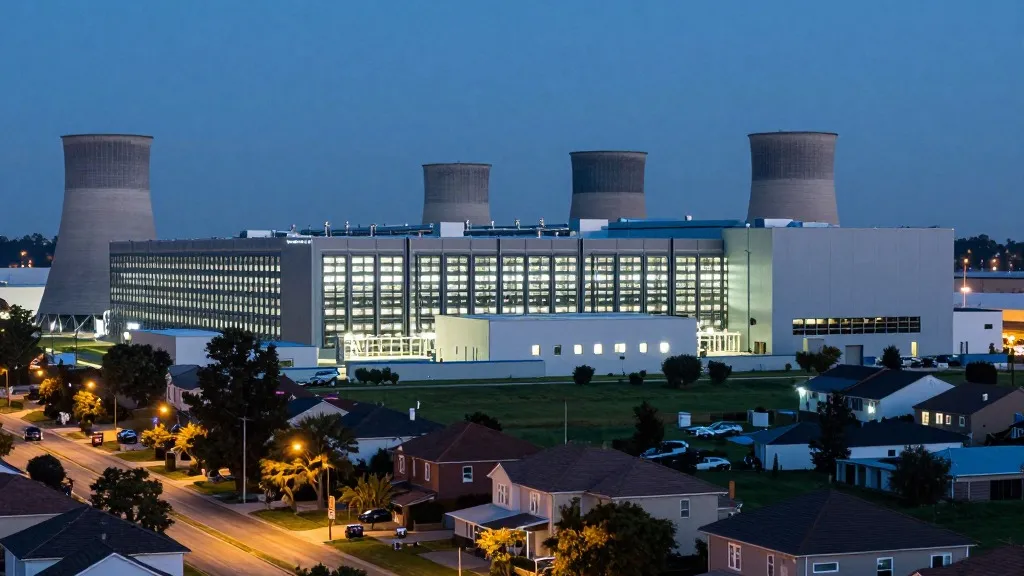
Tensions between rapidly expanding artificial intelligence infrastructure and the small towns hosting these facilities have reached a critical point. In an effort to ease local resistance, President Donald Trump has proposed a new framework requiring data center builders to provide financial and energy dividends to nearby communities. This move aims to address widespread grievances regarding rising electricity rates, noise, and resource depletion, transforming a source of community friction into a potential economic benefit.
The President outlined his vision in a recent post on Truth Social, asserting that these facilities should not only generate their own power but also return excess energy to the local grid. He emphasized that this mandate is designed to make data centers more acceptable to residents who have long protested against the outsized impact of these operations. The core of the proposal is a direct link between the energy consumption of hyperscalers and the financial relief provided to the households surrounding them.
A central pillar of this initiative is the requirement for companies to shoulder the cost of grid upgrades. A recently passed act already orders data centers to fund these improvements to prevent local tax bases from being drained. By combining this with the new dividend structure, the administration hopes to ensure that the financial burden of high-performance computing does not fall disproportionately on neighboring residents. The goal is to use the excess generation capacity of these sites to stabilize or even reduce local utility bills.
The administration's strategy is also driven by the urgent need to maintain the United States' competitive edge in the global AI race against China. By smoothing the path for new construction, the government seeks to accelerate deployment while simultaneously winning back public favor. Trump noted that data centers which were initially unpopular in certain areas became highly popular once financial deals were struck. He urged developers to make these deals to ensure projects are completed swiftly.
Despite the optimistic tone, significant challenges remain in translating this policy into reality. Critics and community members point out that the economic benefit is only one facet of a broader set of environmental issues. Enormous water consumption, ecological damage, and air pollution continue to make these facilities a difficult sell for many localities. The proposed dividends may not fully offset the physical and environmental strains placed on the community by massive industrial operations.
Furthermore, the mechanics of the dividend system raise practical questions. Companies typically distribute dividends only when they are profitable, yet many new data center builds are still recouping significant construction costs. There is also the matter of power generation sources, with many facilities relying on gas-powered generators in the short term. These systems can be noisy and polluting, which may limit the perceived benefit for residents living in close proximity to the sites.
The outlook for this mandate depends on whether these financial incentives are sufficient to overcome deep-seated community concerns. While the administration aims to streamline the approval process and boost construction rates, the success of the plan will hinge on how effectively the dividends are structured and distributed. For now, the proposal represents a significant attempt to redefine the relationship between big tech infrastructure and the communities that support it.
More Business · Consumer Alerts · Report a business · Got a Story?