Voters Weigh Iran War and Trump's Second Term on Election Day
With polls open, Americans face a choice between maintaining the current administration's foreign policy posture and shifting congressional control, a decision shaped by rising costs and an unpopular conflict.
By Fatou Kim ·
The United States is in the midst of a pivotal midterm election, occurring halfway through President Donald Trump's second term. The outcome will determine which party controls Congress for the final two years of his presidency. All 435 seats in the U.S. House are up for grabs, with Republicans holding 218 and Democrats 214, plus one independent. Democrats need a net gain of three districts to secure a majority, while Republicans can afford to lose no more than two seats. The Associated Press describes this election as a referendum on Trump's second term, noting that voters are struggling with high prices and are angry over an unpopular war with Iran.
In the U.S. Senate, 35 seats are contested, including 33 regular elections and two special elections for the terms previously held by Marco Rubio and JD Vance. Republicans currently hold 53 seats, while Democrats hold 45, plus two independents who caucus with Democrats. Democrats need a net gain of four seats to take the chamber, whereas Republicans can lose only two. Ballotpedia identifies 13 Senate races as battlegrounds, including key contests in Georgia, Iowa, Kansas, and Texas. The war with Iran has emerged as a central issue, with the Associated Press noting that the conflict has contributed to voter dissatisfaction with the current administration's handling of foreign policy and the economy.
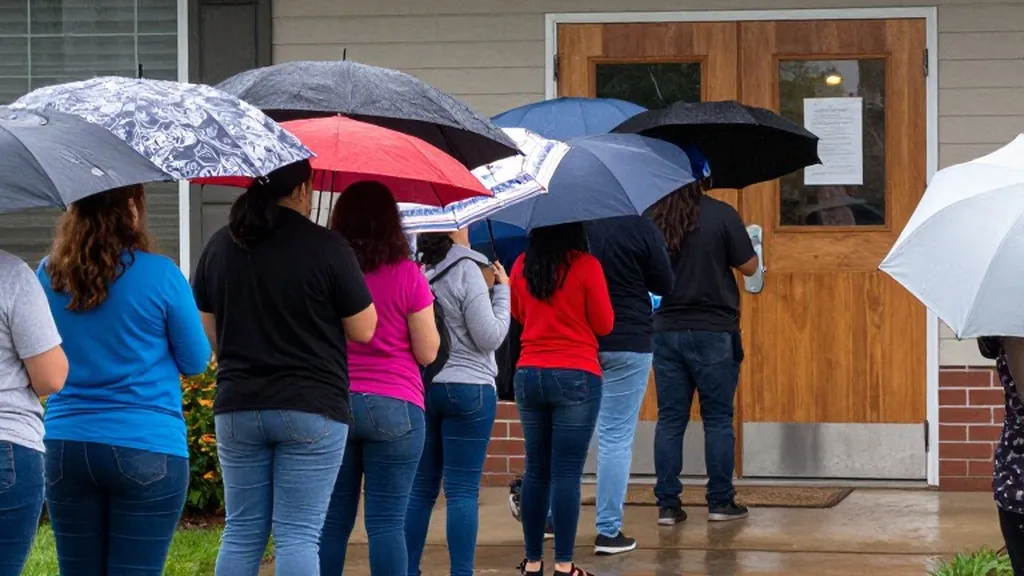
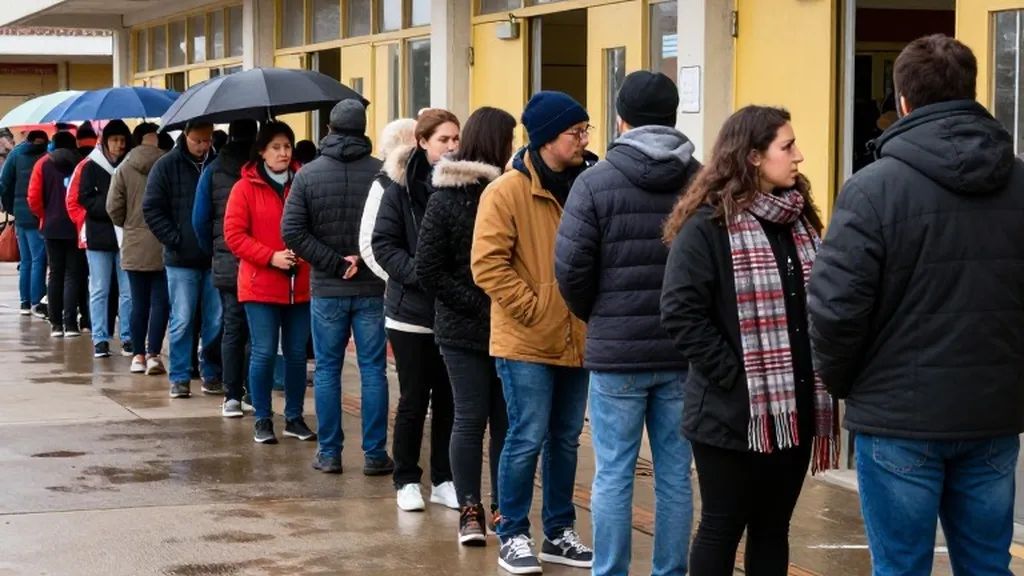
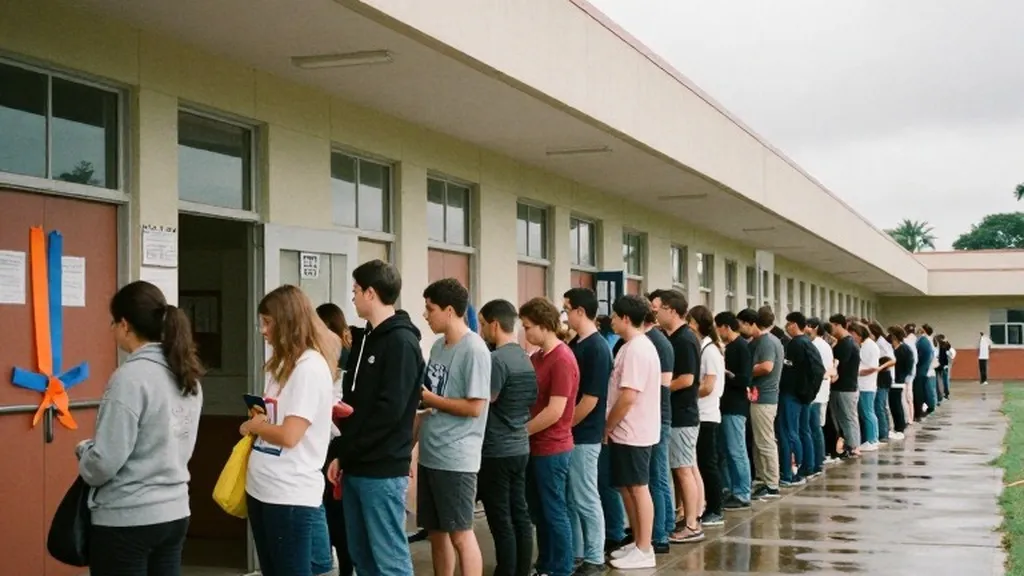
The mood in polling places is defined by economic anxiety and frustration with foreign policy. AP-NORC polling indicates that 35 percent of U.S. Adults approve of Trump's job performance, while only 25 percent approve of his handling of the economy. About seven in 10 Americans say the country is heading in the wrong direction. Many voters blame the president for high prices, a sentiment that has fueled support for challengers in both chambers. The war with Iran, which the Associated Press notes is unpopular, has added to this strain, making the election a test of public patience with the administration's military and diplomatic strategies.
Republican candidates are bracing for the possibility of losing the House while fighting to hold the Senate. One or two seats could tip either chamber, making the margins extremely tight. Democrats, meanwhile, are cautiously optimistic, pointing to the high cost of living and the unpopularity of the war as key factors. RNC Chairman Joe Gruters emphasized the importance of turnout, stating, "Everything depends on turnout. If we turn out our voters, we win, and that's what we've been planning for." In contrast, DCCC Chair Rep. Suzan DelBene said, "The American people are angry. They want change."
President Trump has been active in campaigning, holding dozens of rallies across the country, ending his recent schedule in Salina, Kansas. There, he told supporters, "I really want you to pretend I'm on the ballot." His rallies included stops in Mississippi, South Carolina, and Texas, though many Republican candidates have kept a distance from the president. Trump has continued to make claims about voting fraud, including that noncitizens vote in large numbers, and his administration has sued in Alaska and California. Democrats fear interference and intimidation as the Justice Department threatens to prosecute local election officials, adding another layer of complexity to an election already focused on the war and the economy.
The financial stakes of this election are unprecedented. The 2026 elections are likely to be the most expensive in history. Republican committees outraised and outspent Democratic committees, aided by Trump-affiliated groups and Elon Musk. However, at the candidate level, Democrats outraised their opponents. 88.1 percent of Republican general election TV ad spending went to states and districts Trump won in 2024, including more than $850 million in areas where he won by 10 points or more. This spending strategy reflects an effort to consolidate support in areas where the president has a strong base, while Democrats focus on competitive districts where the war and economic concerns are driving voter sentiment.
Voters on the ground are expressing their views on the issues that define this election. Mark Barker of Palm Beach Gardens, Florida, said, "I've just been following Trump the whole time. I really think he's doing an awesome job." On the other hand, James Moore, a 57-year-old librarian in Raleigh, North Carolina, said, "I'm paying more taxes. I'm paying more for my healthcare. I'm paying more for everything." These sentiments reflect the broader divide between those who support the administration's approach to the war and the economy and those who seek change. The election is not just about party affiliation but about how voters weigh the costs of the current administration's policies against the promise of a new congressional majority.
The stakes extend beyond the immediate control of Congress. If Democrats win even one chamber, investigations and possible impeachment proceedings become likely. House Democratic Leader Hakeem Jeffries would be the first Black speaker and has outlined a 100-day agenda focused on the cost of living and oversight. A strong Democratic night would also boost potential 2028 candidates such as Gavin Newsom, JB Pritzker, and Pete Buttigieg, while potentially complicating the path for Vice President JD Vance. Republicans have tried to beat the typical midterm pattern, where a president's party almost always loses seats, through redistricting. However, new districts in states like Florida and Ohio may not vote as drawn, adding uncertainty to the final outcome.